

04 Oct
What Is a Balanced Breakfast? A Simple Formula
If breakfast leaves you hungry again by 10 a.m., the problem is rarely willpower — it is usually the formula. A balanced breakfast is not about a perfect superfood or a long recipe list. It is a simple combination of protein, fiber-rich carbohydrates, healthy fats, and produce that keeps your blood sugar steadier, your energy more even, and your appetite satisfied until lunch.
In this guide, you will learn what a balanced breakfast actually means, the easy plate formula nutrition experts use, how much of each nutrient you need, and 10 practical breakfast combinations you can build in five minutes or less. No calorie counting is required, and every idea works with foods you probably already buy.
What Is a Balanced Breakfast, Exactly?
A balanced breakfast is a morning meal that includes a mix of macronutrients — protein, carbohydrates, and fat — plus fiber, water, and ideally some fruit or vegetables. Instead of relying on one food group, such as toast alone or juice alone, it spreads the nutritional work across several foods so you get both quick energy and slow, lasting fuel.
The Harvard T.H. Chan School of Public Health describes a healthy eating pattern as one built around vegetables and fruits, whole grains, healthy proteins, and healthy oils, with water as the main drink.[1] Applied to breakfast, that means your morning plate should look a lot like a smaller, faster version of a balanced lunch or dinner — not a separate category of sugary, refined foods.
The World Health Organization similarly recommends a diet rich in fruits, vegetables, legumes, nuts, and whole grains, with limited free sugars and unhealthy fats.[2] A balanced breakfast is simply where that pattern starts each day.
Why balance matters more in the morning
After an overnight fast, your body is primed to absorb nutrients quickly. A breakfast made mostly of refined carbohydrates and sugar — such as a pastry and sweetened coffee — digests fast, can spike and then drop blood glucose, and often triggers mid-morning cravings. Adding protein, fiber, and fat slows that process down, which is why two breakfasts with the same calories can leave you feeling completely different three hours later.
If you have ever wondered whether skipping the meal altogether is the issue, the research is nuanced. What you eat tends to matter more than a rigid rule about eating. Whether you eat at 7 a.m. or break your fast later, using a balanced formula when you do eat is the habit that supports steadier energy.
The Simple Balanced Breakfast Formula
Here is the formula to memorize. Every balanced breakfast contains four building blocks:
- 1. Protein for staying power — eggs, Greek yogurt, cottage cheese, milk, tofu, beans, or nut butter
- 2. Fiber-rich carbohydrate for steady energy — oats, whole-grain bread, whole-grain cereal, fruit, or vegetables
- 3. Healthy fat for satisfaction — nuts, seeds, avocado, olive oil, or nut butter
- 4. Produce for volume, fiber, and micronutrients — berries, banana, spinach, tomatoes, peppers, or any fruit or vegetable you enjoy
Plus one more element that is easy to forget: a drink. Water, milk, or unsweetened tea or coffee helps you rehydrate after the night and supports digestion of all that fiber.
You can remember it as Protein + Fiber Carb + Healthy Fat + Produce. If your breakfast has all four, it is balanced — whether it came from a recipe or from leftovers in the fridge.
A quick visual: the breakfast plate method
Picture your plate or bowl divided roughly like this:
- One-quarter protein — about a palm-sized portion or 15 to 30 grams of protein
- One-quarter fiber-rich carbohydrate — a fist-sized portion of oats, whole grains, or starchy vegetables
- One-half produce — fruit and/or vegetables filling the rest of the plate
- One to two thumb-sized portions of healthy fat — a small handful of nuts, a tablespoon of seeds, or a quarter of an avocado woven through the meal
This is not a strict prescription. Active people, taller people, and people training in the morning will eat more; smaller appetites will eat less. The proportions matter more than the exact grams, and they scale up or down with your hunger.
Building Block 1: Protein at Breakfast
Protein is the nutrient most often missing from typical breakfasts, and the one that makes the biggest difference to fullness. It slows stomach emptying, supports muscle maintenance, and helps blunt the glucose rise from carbohydrates eaten with it.
How much protein do you need at breakfast?
A practical target for most adults is 15 to 30 grams at breakfast — roughly one-third of a typical daily need of 50 to 100 grams, depending on body size and activity. You do not need to hit a precise number daily. Consistently including a clear protein source is the win.
Easy breakfast proteins include:
- 2 eggs — about 12 grams
- 3/4 cup Greek yogurt — about 15 to 17 grams
- 1/2 cup cottage cheese — about 12 to 14 grams
- 1 cup milk or fortified soy milk — about 8 grams
- 2 tablespoons peanut butter — about 8 grams
- 1/2 cup cooked beans or lentils — about 7 to 9 grams
Combining two smaller sources, such as oatmeal made with milk plus a spoonful of peanut butter, easily reaches the target. For a full week of high-protein inspiration, keep high-protein breakfast ideas in your rotation alongside this formula.
Building Block 2: Fiber-Rich Carbohydrates
Carbohydrates are your body’s preferred quick fuel, and breakfast is a perfectly good place for them — the key is choosing fiber-rich versions. Fiber slows digestion, feeds beneficial gut microbes, and adds volume that helps you feel full on fewer calories.
Best fiber-rich breakfast carbohydrates
- Rolled or steel-cut oats
- Whole-grain bread, tortillas, and English muffins — check that the first ingredient says whole wheat or whole grain
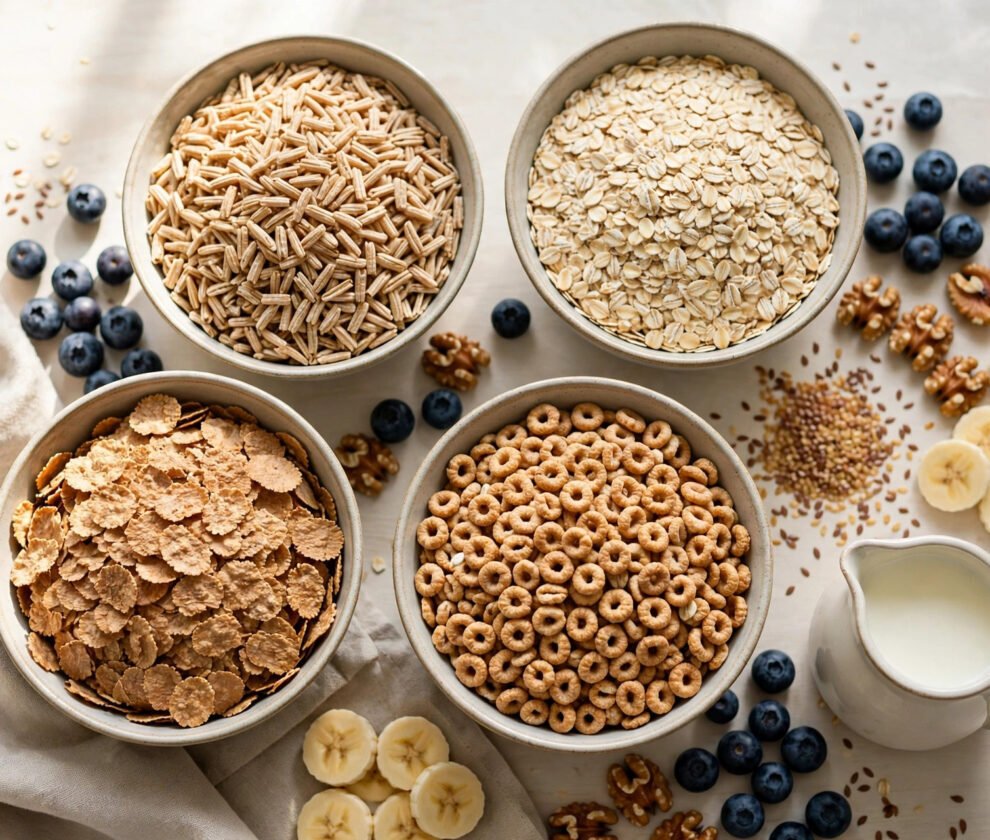
- Whole-grain cereals with at least 3 to 5 grams of fiber per serving
- Fresh or frozen fruit, especially berries, apples, and pears with the skin on
- Vegetables in eggs, smoothies, or breakfast burritos
- Beans, lentils, and sweet potatoes — common in traditional breakfasts worldwide
Adults generally benefit from 25 to 38 grams of fiber per day, yet most people get roughly half that. Breakfast is one of the easiest places to close the gap: a bowl of oats with berries and seeds can deliver 8 to 10 grams before 8 a.m. For more fiber-forward morning options, see these best high-fiber breakfast foods and note how many of them pair naturally with a protein.
What about refined options like white toast or pastries?
They are not forbidden, but on their own they make an unbalanced meal: fast energy, little fiber, and no protein. If you love a croissant on weekends, enjoy it — and balance the plate by adding eggs and fruit on the side. The formula is about addition, not restriction.
Building Block 3: Healthy Fats
Fat is what makes breakfast taste satisfying and helps you absorb fat-soluble vitamins such as A, D, E, and K from your produce. The goal is to choose mostly unsaturated fats — the kind found in plant foods and fish — most of the time.
Simple ways to add healthy fat at breakfast
- A small handful (about 1 ounce) of walnuts, almonds, or mixed nuts
- 1 tablespoon of chia, ground flax, or pumpkin seeds stirred into oats or smoothies
- 1 to 2 tablespoons of natural peanut or almond butter
- Quarter to half an avocado on toast or with eggs
- Eggs cooked in a teaspoon of olive oil
- A drizzle of olive oil over a savory vegetable and bean breakfast bowl
Because fat is calorie-dense, portions stay modest — a thumb or two is plenty for most people. You will often get fat automatically from your protein choice, such as eggs, yogurt, or nut butter, so you may not need to add it separately every day.
Building Block 4: Produce — Fruit and Vegetables
Produce is the most skipped building block at breakfast, and the easiest to add. Fruit brings natural sweetness, water, potassium, and vitamin C. Vegetables bring volume and fiber for very few calories, and they make savory breakfasts more interesting.
Low-effort ways to include produce:
- A handful of berries on oats, cereal, or yogurt
- A banana or apple on the side of any breakfast
- Spinach, tomatoes, mushrooms, or peppers folded into scrambled eggs
- A handful of greens or frozen fruit blended into a smoothie
- Leftover roasted vegetables reheated with beans and an egg
Frozen produce counts fully here. Frozen berries and spinach are picked at peak ripeness, are often cheaper than fresh, and remove the excuse that nothing is available. If smoothies are your fastest route to produce in the morning, these healthy breakfast smoothies without added sugar show how to keep them balanced rather than turning them into fruit juice.
10 Balanced Breakfast Combinations Using the Formula
Each combination below covers protein, fiber-rich carbohydrate, healthy fat, and produce. Use them as templates and swap ingredients based on what you have.
1. Oatmeal power bowl
Oats cooked in milk, stirred with peanut butter, topped with banana slices and chia seeds. Protein from milk and peanut butter, fiber from oats and fruit, fat from peanut butter and chia.
2. Greek yogurt parfait
Greek yogurt layered with berries, a small handful of walnuts, and a sprinkle of whole-grain granola. Build your own variations with these Greek yogurt breakfast bowls as a base.
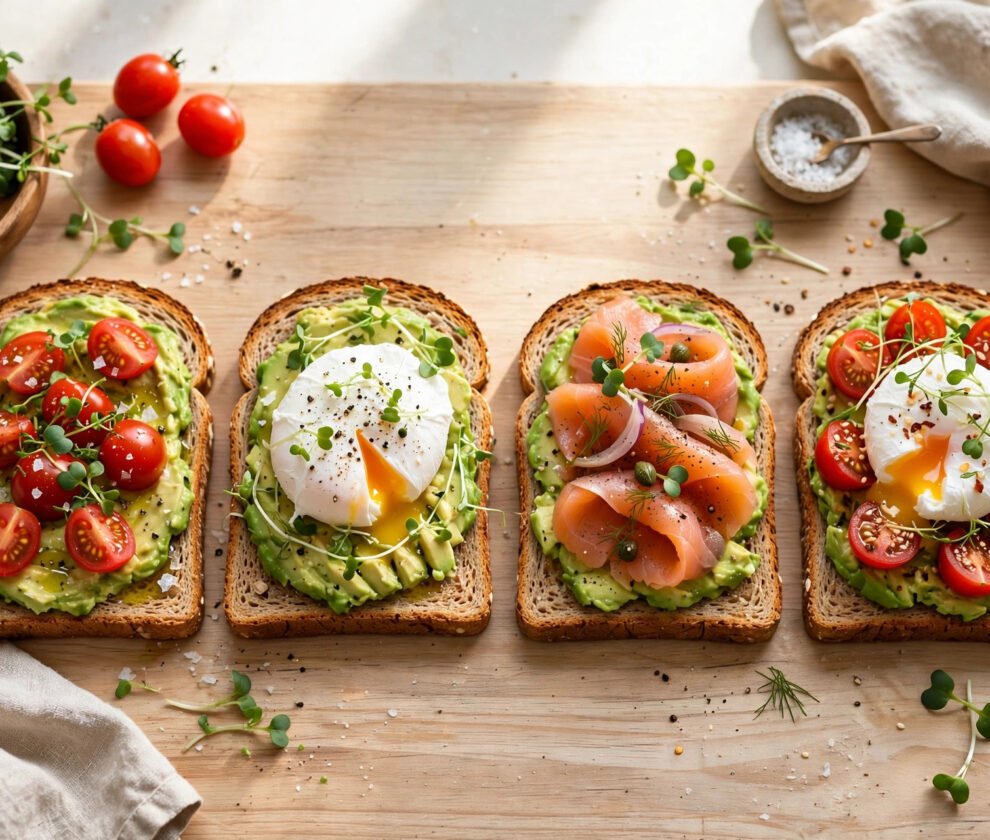
3. Eggs, whole-grain toast, and avocado
Two eggs any style, one or two slices of whole-grain toast, a quarter avocado, and tomatoes or fruit on the side. A classic because it hits every building block in ten minutes.
4. Cottage cheese fruit plate
Cottage cheese with sliced peaches or melon, whole-grain toast, and a sprinkle of pumpkin seeds. High in protein, refreshing, and requires no cooking.
5. Breakfast burrito
Whole-grain tortilla filled with scrambled eggs or tofu, black beans, peppers, spinach, and a little cheese or avocado. Make a batch ahead and reheat on busy mornings.
6. Overnight oats jar
Oats soaked overnight in milk or fortified soy milk with yogurt, berries, and flaxseed. Grab-and-go, endlessly flavor-flexible, and one of the best meal-prep breakfasts — see overnight oats recipes for busy mornings for flavor ideas.
7. Savory bean and vegetable bowl
Warm white beans or lentils with sautéed greens, a fried or poached egg, olive oil, and whole-grain toast. Filling, inexpensive, and popular in many traditional food cultures.
8. Whole-grain cereal, upgraded
A fiber-rich whole-grain cereal with milk, sliced banana, and a tablespoon of chopped nuts. The upgrades turn a plain bowl into a balanced one in under a minute.
9. Nut butter banana toast
Whole-grain toast with natural peanut butter, banana slices, and a sprinkle of cinnamon and hemp seeds, plus a glass of milk or a small yogurt on the side for extra protein.
10. Green smoothie plus a protein side
A smoothie of spinach, frozen mango, Greek yogurt, milk, and flaxseed, paired with a hard-boiled egg or a small handful of nuts if you need more staying power. The pairing keeps the smoothie from becoming a produce-only meal.
How to Build a Balanced Breakfast in 5 Minutes
On rushed mornings, speed beats perfection. Use this five-minute assembly method:
- Step 1: Pick your protein first — yogurt, eggs, cottage cheese, or a protein-rich smoothie base
- Step 2: Add the fiber carbohydrate — oats, whole-grain bread, cereal, or fruit
- Step 3: Add one fat — nuts, seeds, nut butter, or avocado
- Step 4: Throw in produce — fresh, frozen, or leftover, whatever is fastest
- Step 5: Pour a drink — water or milk — and you are done
Keeping two or three formula-ready combinations stocked — such as oats plus yogurt plus frozen berries, or eggs plus tortillas plus beans — means you never have to think hard at 7 a.m. If mornings are your tightest window, these ideas for what to eat for breakfast when you have no time pair well with the formula.
Balanced Breakfasts for Different Goals
For weight management
Emphasize protein and produce, which deliver fullness for fewer calories, and keep energy-dense fats and granola measured rather than poured freely. A yogurt parfait or egg-and-vegetable plate tends to satisfy longer than a pastry of equal calories.
For busy mornings and meal prep
Rotate make-ahead options — overnight oats, chia pudding, breakfast burritos, and hard-boiled eggs with fruit. Preparing two options on Sunday covers most of the week.
For active mornings and workouts
Eat a slightly larger fiber-carbohydrate portion before training, such as oatmeal with banana and nut butter one to two hours before exercise, and include a clear protein source afterward to support muscle repair.
For kids
The same formula works in smaller portions: milk or yogurt, whole-grain toast or oats, nut or seed butter where appropriate, and fruit. Let kids choose the fruit or topping — involvement makes new breakfasts far more likely to be eaten.
Common Balanced Breakfast Mistakes
Protein is missing
Toast, cereal with a splash of milk, or fruit alone leaves most people hungry within two hours. Add an egg, yogurt, or nut butter and notice the difference the same day.
Breakfast is mostly added sugar
Sweetened cereals, flavored yogurts, pastries, and juice can stack up sugar quickly. Check labels and aim for breakfasts where sweetness comes mainly from whole fruit. Save added sugar for foods where you truly taste and enjoy it.
Produce never appears
If your breakfast is beige, it is probably missing produce. One handful of berries or a banana fixes the color — and the fiber, potassium, and vitamin content — instantly.
Portions ignore hunger
A balanced breakfast is not a tiny one. If you are genuinely hungry again an hour later, the meal was likely too small or light on protein and fiber. Increase the portion at breakfast rather than grazing distractedly all morning.
Weekend breakfasts undo weekday habits
There is nothing wrong with a celebratory brunch. Simply apply the same formula: include eggs or yogurt for protein, fruit on the side, and whole grains where you can, and the meal lands balanced without feeling restricted.
Frequently Asked Questions
What is the healthiest balanced breakfast?
There is no single healthiest breakfast, but strong options share the same pattern: a clear protein, a fiber-rich whole grain or fruit, healthy fats, and produce. Oatmeal with milk, nut butter, and berries, or eggs with whole-grain toast, avocado, and fruit, are both excellent everyday examples.
How much protein should a balanced breakfast have?
Most adults do well with 15 to 30 grams of protein at breakfast. Two eggs plus milk, a cup of Greek yogurt with nuts, or oatmeal made with milk and peanut butter all land in that range. Exact needs vary with body size, age, and activity level.
Is oatmeal alone a balanced breakfast?
Plain oatmeal is a great fiber-rich base but is light on protein and fat by itself. Cook it in milk, stir in Greek yogurt or nut butter, and top it with berries and seeds, and it becomes a fully balanced meal in the same bowl.
Can I have a balanced breakfast without eggs?
Absolutely. Greek yogurt, cottage cheese, tofu scrambles, beans, lentils, milk, fortified soy products, nut butters, and protein-rich smoothies all cover the protein building block without eggs. The formula cares about nutrients, not specific foods.
Do I have to eat breakfast to be healthy?
Not necessarily. Research does not support forcing breakfast on people who genuinely prefer eating later. What matters most is your overall daily pattern. When you do eat your first meal — at 7 a.m. or 11 a.m. — making it balanced with protein, fiber, healthy fat, and produce is the choice that supports steady energy.
Conclusion
A balanced breakfast does not need a recipe, a supplement, or a strict calorie target. It needs four building blocks: protein for staying power, a fiber-rich carbohydrate for steady energy, a healthy fat for satisfaction, and produce for fiber and micronutrients — plus a drink to start the day hydrated.
Start tomorrow with one small upgrade: add a protein to the breakfast you already eat, or add a handful of fruit to a protein you already like. Then build toward the full formula across the week with the 10 combinations above. Small, repeatable improvements beat a perfect breakfast you only manage once.
Disclaimer: This article is for general educational information only and is not medical advice. It does not diagnose, treat, cure, or prevent any disease. Everyone’s nutrition needs are different, especially if you are pregnant, managing a medical condition such as diabetes, or taking medication. Please talk with a qualified healthcare professional or registered dietitian for advice tailored to you.
References: [1] Harvard T.H. Chan School of Public Health — The Nutrition Source: Healthy Eating Plate (https://www.hsph.harvard.edu/nutritionsource/healthy-eating-plate/). [2] World Health Organization — Healthy diet fact sheet (https://www.who.int/news-room/fact-sheets/detail/healthy-diet).
Comments(08)