
Category: Sleep

Best Sleep Position for Back Pain and Better Posture

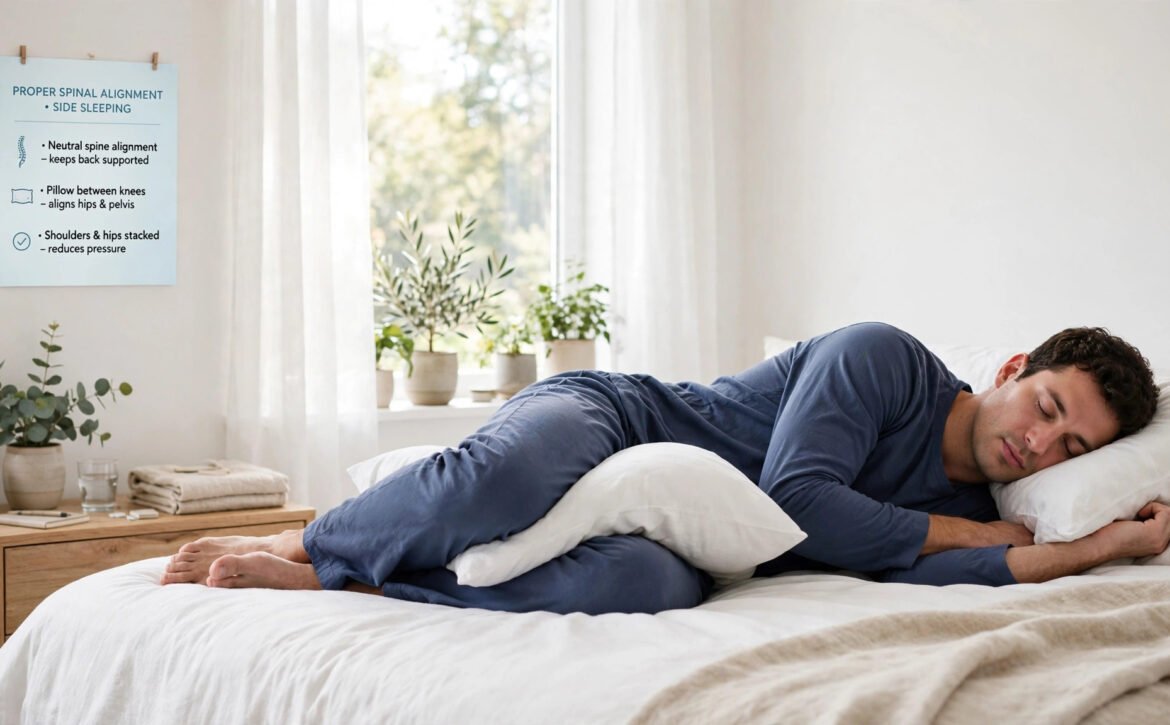
What is the best sleep position for back pain? For most people, it is side sleeping with a pillow between the knees, or back sleeping with a pillow under the knees — both keep your spine in a neutral line instead of twisting or arching it all night. Stomach sleeping is the worst position for back pain and posture. In this guide, we rank the best sleep positions for back pain, show you exactly how to set up pillows for proper spinal alignment, and cover the daytime habits and warning signs you should know about.

Why Sleep Position Matters for Back Pain

You spend roughly a third of your life in bed, and your spine notices. During the day, gravity compresses your spinal discs; at night, lying down lets them rehydrate and recover — but only if your spine stays close to its natural alignment. A position that twists the neck, arches the lower back, or lets the top leg drag the pelvis out of line keeps muscles and ligaments under tension for 7–8 hours straight. That is why you can go to bed feeling okay and wake up stiff: the damage was slow, silent, and sustained.

The goal of any good sleep position is simple: keep your ears, shoulders, and hips in one straight line, with the natural curves of your neck and lower back gently supported — not flattened, not exaggerated. Every recommendation below serves that one principle.

The Best Sleep Positions for Back Pain, Ranked

1. Side Sleeping With a Pillow Between Your Knees — Best Overall

This is the position most spine specialists recommend first. Lying on your side keeps the spine naturally straight, and the pillow between your knees stops your top leg from pulling your pelvis and lower spine out of alignment.

How to do it right:

  • Lie on your side with knees slightly bent — not curled into a tight ball (more on that below).
  • Place a firm pillow between your knees, thick enough to keep your hips level.
  • Keep your head pillow at a height that fills the gap between your ear and the mattress, so your neck stays straight — too flat or too thick both strain the neck.
  • Hug a pillow if your shoulders roll forward; it keeps your upper back open.
  • Alternate sides occasionally if one shoulder gets sore, though most people have a preferred side — that is fine.

2. Back Sleeping With a Pillow Under Your Knees — Best for Even Weight Distribution

Sleeping on your back spreads your weight most evenly and avoids twisting the spine, which makes it excellent for back pain — with one adjustment. Lying flat can let the lower back arch and press the lumbar spine into the mattress uncomfortably. Sliding a pillow under your knees flattens that arch, relaxes the hip flexors, and lets the lower back rest in a neutral curve.

Setup tips:

  • Use a pillow under the knees, not under the calves alone — you want the knees slightly elevated and supported.
  • Choose a thinner head pillow than side sleepers need; a thick pillow on your back pushes the head forward and strains the neck.
  • If your lower back still gaps, a small rolled towel in the lumbar curve can help.
  • Back sleeping is not ideal if you snore heavily or have sleep apnea, since gravity lets the tongue fall back — side sleeping is the better pick then.

3. The Fetal Position — Good, With Caveats

A loose fetal curl is the world’s most popular sleep position and is generally fine for back pain — it opens the spaces between vertebrae, which can relieve pressure for people with herniated discs. The catch is the word “loose.” Curling into a tight ball rounds the upper back, collapses the chest, and can strain the neck and restrict deep breathing. Keep the curl relaxed: knees bent, chin slightly tucked but not jammed to your chest, and still use the between-knee pillow.

4. Reclined Sleeping — Helpful for Specific Conditions

Sleeping in a reclined position (as with an adjustable bed or a wedge setup) can ease pain from conditions like isthmic spondylolisthesis, where lying flat increases discomfort. The recline opens the angle between the torso and thighs, reducing pull on the lower spine. It is a legitimate therapeutic option, but for general back pain the side and back positions above work just as well without special equipment.

The Worst Position: Stomach Sleeping

If you sleep on your stomach and wake with back pain, the position is the prime suspect. Stomach sleeping forces you to turn your head sharply to one side for hours — straining the neck — while gravity pulls your midsection down, arching the lower back into an exaggerated curve. It is the hardest position from which to maintain anything resembling spinal alignment.

If you are a committed stomach sleeper, you do not have to change overnight. Try this transition plan:

  • Week 1–2: Start the night on your side (with the between-knee pillow ready). If you roll onto your stomach, do not stress — just reset when you wake.
  • Place a body pillow in front of you to make side sleeping feel as “held” and cozy as stomach sleeping.
  • Put a thin pillow under your hips on the nights you do end up on your stomach — it reduces the lumbar arch.
  • Most people find that within 2–3 weeks, side sleeping starts to feel natural. Better mornings are strong motivation to continue.

Pillows and Mattress: The Alignment Toolkit

Position is half the battle; what you lie on is the other half.

Choosing the Right Pillow

  • Side sleepers: a firmer, thicker pillow that bridges the shoulder-to-ear gap.
  • Back sleepers: a thinner pillow, possibly with a small neck roll for cervical support.
  • Replace pillows every 1–2 years — a flattened pillow is a neck-pain pillow. Fold it in half: if it does not spring back, it is done.
  • Memory foam or latex holds shape better than old fiberfill for alignment purposes.

Mattress Firmness

The old advice “firm is best for backs” is outdated. Research generally finds a medium-firm mattress reduces back pain more than a very firm one, because it supports the spine while allowing shoulders and hips to sink slightly and stay aligned. If your mattress sags visibly or is over 8–10 years old, no position trick will fully compensate — the surface itself is working against you. Your sleep quality overall depends on this foundation more than most people realize.

Daytime Habits That Make Nights Easier

Nighttime alignment cannot fully undo a day of postural abuse. These daytime habits multiply the benefit of a good sleep position:

  • Strengthen your core and glutes. Weak deep-core muscles force the lower back to do stabilizing work all day. Our beginner strength training guide includes bodyweight moves that build exactly this support.
  • Walk daily. Gentle movement keeps spinal discs nourished and loosens stiff back muscles — see the benefits of walking 10,000 steps a day.
  • Break up sitting. Stand, stretch, or walk for a few minutes every hour; prolonged sitting shortens hip flexors, which tug the pelvis forward and worsen lumbar arch at night.
  • Lift properly — hinge at the hips, keep loads close, and avoid twisting under load.
  • Manage stress. Tension lives in the back and shoulders; the relaxation techniques in our stress-reduction guide help more than people expect.

The National Institute of Neurological Disorders and Stroke back pain guide similarly stresses that staying active — rather than prolonged bed rest — is one of the most effective strategies for most back pain.

When Back Pain Needs a Doctor, Not a New Pillow

Position changes help mechanical, posture-related pain — the achy stiffness most people get. See a healthcare professional promptly if you notice any red flags:

  • Pain after a fall, accident, or injury
  • Numbness, tingling, or weakness in the legs
  • Loss of bladder or bowel control (seek urgent care)
  • Fever alongside back pain
  • Pain that does not improve after 2–3 weeks of better sleep posture and activity
  • Unexplained weight loss with back pain

These can signal disc problems, nerve compression, infection, or other conditions that positioning alone will not fix.

Frequently Asked Questions

What is the best sleep position for back pain?

Side sleeping with a pillow between the knees is the best sleep position for back pain for most people, because it keeps the spine, hips, and pelvis in neutral alignment. Back sleeping with a pillow under the knees is a close second. Stomach sleeping is the worst position for back pain.

What is the best sleep position for better posture?

The same positions: side sleeping with aligned hips and a supportive head pillow, or back sleeping with knees slightly elevated. Both train your body to hold a neutral spinal line for hours, which carries over into daytime posture — especially when combined with core strengthening.

Is it bad to sleep on your side every night?

No — side sleeping is healthy for most people. Just use a pillow between the knees, keep the curl loose rather than a tight fetal ball, use a pillow thick enough to keep your neck straight, and switch sides if a shoulder gets sore.

Can the wrong sleep position cause back pain?

Yes. Stomach sleeping and unsupported side sleeping (top leg dragging the pelvis sideways, head propped at an angle) keep spinal muscles and ligaments under uneven tension all night, which commonly causes morning stiffness and aching that eases as the day goes on.

How long does it take for a new sleep position to help back pain?

Many people notice easier mornings within 1–2 weeks of consistent better positioning. Give any change at least 2–3 weeks before judging it, since your body needs time to unlearn old habits. If pain persists beyond that despite good positioning and staying active, see a healthcare professional.

Conclusion

The best sleep position for back pain is not exotic: sleep on your side with a pillow between your knees, or on your back with a pillow under your knees, and retire the stomach-sleeping habit. Add a supportive (not ancient) pillow, a medium-firm mattress, and daytime core strength and walking, and most posture-related morning pain improves within weeks. Tonight, try just the between-knee pillow — it is the single smallest change with the biggest payoff. Your spine spends a third of your life in bed; make those hours work for it, not against it.

General health information only — not medical advice. Talk to a qualified professional about personal health decisions. See our Disclaimer.

Read More

Is 6 Hours of Sleep Enough? What Science Says

Is 6 hours of sleep enough? For most adults, the honest answer is no. Major health organizations, including the CDC and the American Academy of Sleep Medicine, recommend 7 to 9 hours of sleep per night for adults — and research consistently shows that regularly sleeping only 6 hours leads to measurable declines in focus, memory, mood, and long-term health. In this guide, we look at what science actually says about 6 hours of sleep, why you might feel “fine” on less than you need, who the rare exceptions are, and how to tell whether your body needs more rest.

What Science Says: 6 Hours vs. the Recommended 7–9

Sleep researchers have studied restricted sleep for decades, and the pattern is remarkably consistent: cutting sleep to 6 hours a night produces a slow, steady decline in cognitive performance that adds up day after day. You do not simply adapt. Here is what the evidence shows.

The Landmark Sleep-Restriction Study

In one of the most cited experiments in sleep science, researchers at the University of Pennsylvania (Van Dongen et al., 2003) kept volunteers on 4, 6, or 8 hours of sleep per night for two weeks while testing their reaction times and attention daily. The 6-hour group declined steadily: after about 10 days, their cognitive performance was as impaired as people who had stayed awake for one to two full nights. The striking part? The 6-hour sleepers rated themselves as only slightly sleepy — they had no idea how impaired they were.

This finding has been replicated many times since. Chronic mild sleep restriction produces a “sleep debt” that the brain cannot fully pay back with a single good night, and — critically — our self-assessment of how well we are functioning becomes unreliable. Feeling okay on 6 hours is not evidence that 6 hours is enough.

What 6 Hours Does to Your Brain and Body

When adults habitually sleep 6 hours instead of 7–8, studies link the shortfall to:

  • Impaired attention and reaction time — slower responses behind the wheel and at work, with microsleeps the person may not notice.
  • Worse memory consolidation — deep sleep and REM sleep, which are cut short with a 6-hour night, are when the brain files away memories and learning.
  • Mood changes — greater irritability, anxiety, and emotional reactivity after even a few nights of short sleep.
  • Metabolic effects — short sleep is associated with increased hunger hormones (ghrelin), reduced fullness signals (leptin), and higher odds of weight gain over time.
  • Weakened immune function — people sleeping 6 hours or less have been found more likely to catch colds after virus exposure than those sleeping 7+ hours.
  • Long-term health risks — large observational studies associate habitual short sleep with higher risk of heart disease, type 2 diabetes, and hypertension.

None of this means one short night ruins your health. The concern is the pattern — 6 hours night after night, month after month. If you want the full picture of what proper rest does for you, read our guide on why sleep is important.

Why You Might Feel “Fine” on 6 Hours

If 6 hours were truly insufficient, why do so many busy adults insist they function well on it? There are a few well-documented reasons:

1. Your Brain Stops Noticing the Decline

As the Van Dongen study showed, subjective sleepiness plateaus while objective performance keeps dropping. You recalibrate to a lower baseline and mistake it for normal. Many people only realize how impaired they were after a week of 8-hour nights — tasks suddenly feel easier.

2. Caffeine Masks the Signal

Caffeine blocks adenosine, the brain chemical that builds sleep pressure. A strong morning coffee can hide fatigue for hours, but it does not restore the memory consolidation, emotional regulation, or metabolic repair that sleep provides. Late-day caffeine then delays the next night’s sleep, locking in the cycle.

3. You May Be Sleeping More Than You Think

Some self-described “6-hour sleepers” actually get closer to 7 when time in bed, dozing, and weekend catch-up are counted. Others run on adrenaline and stress hormones that temporarily override fatigue — until they crash.

Are There True Short Sleepers? The Rare Exception

Yes — but they are extraordinarily rare. Researchers have identified a small number of families carrying a gene variant (in the DEC2 gene) associated with naturally short sleep: these “natural short sleepers” genuinely thrive on 6 hours or less, wake refreshed without alarms, and show no health downsides. Estimates suggest they make up well under 1–3% of the population.

The uncomfortable truth: far more people believe they are short sleepers than actually are. Unless you consistently wake naturally before your alarm feeling fully alert, fall asleep easily at night, and stay sharp all day without caffeine, you are probably not one of them. Assuming you are the exception is one of the costliest self-diagnoses in sleep health.

5 Signs 6 Hours Is Not Enough for You

Watch for these signals over a typical two-week stretch:

  1. You need an alarm — and hit snooze. Waking naturally before the alarm is a good sign of sufficient sleep; dragging yourself up is not.
  2. You rely on caffeine to function. Needing multiple coffees just to feel baseline-normal suggests a sleep deficit.
  3. You doze in quiet moments. Falling asleep easily in meetings, on the couch after dinner, or as a passenger indicates sleep pressure your nights are not clearing.
  4. Your mood and patience are thinner. Short sleep reliably degrades emotional regulation before it obviously degrades intellect.
  5. Weekends look very different. If you sleep 2+ hours longer on weekends, that “social jet lag” is your body trying to repay a weekday debt.

If several of these sound familiar, your body is telling you 6 hours is not enough — even if your mind has gotten used to it.

The 2-Week Test: Find Your Real Sleep Need

Instead of guessing, run a simple experiment. For two weeks:

  • Go to bed 8 hours before your required wake time (giving yourself a full 7.5–8 hour opportunity).
  • Keep the same wake time every day, including weekends.
  • Cut caffeine after noon and dim screens in the last hour before bed.
  • Note each morning: how fast you fell asleep, whether you woke before the alarm, and your 3 p.m. energy on a 1–10 scale.

Most people discover that after 4–5 days of full nights, their afternoon energy, mood, and focus noticeably improve — strong evidence their 6-hour habit was costing them more than they realized. Our step-by-step plan on how to fix your sleep schedule walks you through the gradual-shift method that makes this transition painless.

How to Get More Sleep Without Overhauling Your Life

Going from 6 to 7.5 hours sounds like finding 90 minutes you do not have. In practice, most people reclaim it from low-value evening time:

  • Set a “wind-down alarm” 60 minutes before bed — when it rings, screens go off and you start a calming routine.
  • Move your bedtime earlier in 15-minute steps every 3–4 nights rather than attempting a dramatic jump.
  • Get morning daylight within an hour of waking; it anchors your body clock and makes you sleepier at the right time that night.
  • Keep the bedroom cool, dark, and quiet — small environment upgrades improve sleep efficiency, so you get more restorative sleep per hour.
  • Manage evening stress — racing thoughts are the top sleep thief. A short relaxation practice, like the techniques in our guide to reducing stress and anxiety or a 5-minute mindfulness practice, can shorten the time it takes to fall asleep.

The CDC’s sleep guidance and the National Heart, Lung, and Blood Institute’s overview of sleep deprivation both emphasize the same core message: adults need at least 7 hours, and consistently getting less carries real costs.

Frequently Asked Questions

Is 6 hours of sleep enough for adults?

For the large majority of adults, no. Health authorities recommend 7–9 hours, and controlled studies show that 6 hours a night produces cumulative cognitive impairment equivalent to 1–2 nights of total sleep loss after about two weeks — even though people feel only mildly sleepy.

Can you survive on 6 hours of sleep long-term?

You can function, but “surviving” is not thriving. Habitual 6-hour sleep is linked in long-term studies to higher risks of obesity, type 2 diabetes, hypertension, and cardiovascular disease, plus impaired immunity and mood. A tiny minority with a rare gene variant are true short sleepers; almost everyone else pays a price.

Why do I feel fine on 6 hours of sleep?

Your self-assessment is unreliable under chronic sleep restriction — research shows perceived sleepiness plateaus while actual performance keeps declining. Caffeine, stress hormones, and habituation to a lower baseline all mask the deficit. Try two weeks of 8-hour sleep opportunities; most people are surprised by the difference.

Is 6 hours of sleep enough for teenagers?

Definitely not. Teens aged 13–17 need 8–10 hours per night according to the American Academy of Sleep Medicine. Adolescents are already biologically wired to fall asleep later, so early school starts plus short nights hit them especially hard.

How can I go from 6 hours to 8 hours of sleep?

Shift bedtime earlier by 15 minutes every few nights, keep a fixed wake time (including weekends), get bright light in the morning, cut caffeine after noon, and build a screen-free wind-down routine. See our detailed guide on how to fix your sleep schedule for the full method.

Conclusion

So, is 6 hours of sleep enough? Science gives a clear verdict: for nearly all adults, it is not. Six hours may feel adequate because your brain quietly adapts to performing worse — but reaction time, memory, mood, metabolism, and long-term health all pay the toll. The encouraging news is that the fix is simple, if not always easy: give yourself a genuine 7.5–8 hour sleep opportunity for two weeks and judge by how you feel. Most people never go back. Start tonight — set a wind-down alarm, dim the lights, and let your body show you what “enough” really feels like.

General health information only — not medical advice. Talk to a qualified professional about personal health decisions. See our Disclaimer.

Read More

Why Is Sleep Important? 7 Proven Health Benefits Explained

If you have ever wondered why is sleep important, here is the short answer: sleep is when your brain and body do their most essential repair work. While you sleep, your brain consolidates memories, your muscles recover, your immune system strengthens, and the hormones that control hunger, stress, and mood reset for the next day. Adults who regularly sleep less than 7 hours face higher risks of obesity, heart disease, type 2 diabetes, and depression. Sleep is not “downtime” — it is one of the most powerful health habits you have.

In this guide, you will discover 7 proven benefits of quality sleep, exactly how much sleep you need at your age, and simple, practical tips to sleep better starting tonight.

What Happens in Your Body While You Sleep

Sleep is far from passive. Your brain cycles through light sleep, deep sleep, and REM (rapid eye movement) sleep roughly every 90 minutes. Deep sleep is when the body repairs tissues, builds bone and muscle, and strengthens the immune system. REM sleep is when most dreaming happens and the brain processes emotions and locks in what you learned during the day.

Meanwhile, important hormones are hard at work. Growth hormone is released to repair the body. Cortisol (the stress hormone) drops overnight so you wake up calm. And two appetite hormones — ghrelin and leptin — rebalance, which is why poor sleep often leads to stronger junk-food cravings the next day.

7 Proven Health Benefits of Good Sleep

1. Sharper Brain, Better Memory, and Focus

Sleep is when your brain files away the day’s experiences into long-term memory. Studies consistently show that people who sleep well after learning remember more than those who stay awake. Good sleep also improves concentration, problem-solving, and creativity. If you regularly feel foggy at work or forgetful, your sleep — not your willpower — may be the problem.

2. A Healthier Heart

During sleep, your blood pressure naturally dips, giving your heart and blood vessels a nightly rest. People who consistently sleep too little tend to have higher blood pressure and a greater risk of heart disease and stroke over time. Getting 7 to 9 hours gives your cardiovascular system the recovery window it needs.

3. A Stronger Immune System

Your immune system produces infection-fighting proteins called cytokines while you sleep, and certain types of immune cells become more active. Research has found that people who sleep fewer than 7 hours are more likely to catch a cold after virus exposure than those sleeping 8 or more. Think of consistent sleep as a daily tune-up for your defenses.

4. Easier Weight Management

Sleep and weight are closely linked. Short sleep raises ghrelin (which makes you hungry) and lowers leptin (which tells you that you are full). It also raises cortisol, which encourages fat storage around the belly. People who sleep well find it noticeably easier to stick to healthy eating plans — which is why sleep is a foundation of any sustainable weight routine, alongside balanced nutrition and movement.

5. Better Mood and Emotional Resilience

Even one bad night makes most people irritable; chronic short sleep is strongly linked to anxiety and depression. During REM sleep, the brain processes emotional experiences, helping you react more calmly to stress the next day. Prioritizing sleep is one of the simplest ways to protect your mental health — and if stress itself is keeping you awake, learning how to reduce stress and anxiety naturally can help break the cycle.

6. Faster Physical Recovery and Performance

Athletes have known this for years: sleep improves reaction time, accuracy, and endurance, while cutting injury risk. But you do not need to be an athlete to benefit. Whether you walk, lift, or simply live an active life, muscles repair and energy stores refill during deep sleep. Pairing good sleep with regular physical activity creates a powerful loop — exercise improves sleep quality, and good sleep improves your next workout.

7. Long-Term Disease Protection

Large long-term studies link consistently good sleep with lower risks of type 2 diabetes, heart disease, obesity, and even cognitive decline later in life. No single habit guarantees lifelong health, but sleep is one of the few daily behaviors with such broad, well-documented protective effects.

How Much Sleep Do You Actually Need?

Needs vary by age. According to the CDC, here are the widely recommended ranges:

Age Group Recommended Sleep per Night
Newborns (0–3 months) 14–17 hours
Infants (4–12 months) 12–16 hours
Toddlers (1–2 years) 11–14 hours
Preschoolers (3–5 years) 10–13 hours
School-age children (6–12 years) 9–12 hours
Teenagers (13–18 years) 8–10 hours
Adults (18–64 years) 7–9 hours
Older adults (65+ years) 7–8 hours

For most adults, 7 to 9 hours is the sweet spot. Consistently sleeping less than 7 hours is where health risks start climbing.

Simple Tips to Sleep Better Starting Tonight

  • Keep a consistent schedule. Go to bed and wake up at the same time every day — even on weekends. A steady rhythm trains your body clock. If your timing has drifted, follow our step-by-step guide on how to fix your sleep schedule.
  • Dim the lights an hour before bed. Bright light, especially from screens, suppresses melatonin, the hormone that makes you drowsy.
  • Make your bedroom cool, dark, and quiet. Around 18–20°C (65–68°F) works well for most people.
  • Cut caffeine after early afternoon. Caffeine can linger in your system for 6–8 hours.
  • Wind down with a calm routine. Reading, gentle stretching, or a short session of mindfulness meditation for beginners signals to your brain that it is time to rest.
  • Get morning sunlight. Daylight exposure in the morning helps set your internal clock and improves nighttime sleepiness.
  • Exercise regularly — but not too late. Daytime activity is linked to deeper sleep; intense workouts right before bed can keep some people wired.

Frequently Asked Questions

Is 6 hours of sleep enough for adults?

For the vast majority of adults, no. The CDC recommends at least 7 hours per night for adults aged 18–60. A tiny fraction of people genuinely thrive on 6 hours, but most people who think they do are simply used to functioning while sleep-deprived.

Why do I feel tired even after 8 hours of sleep?

Quantity is not the same as quality. Fragmented sleep, sleep apnea, an irregular schedule, alcohol before bed (which disrupts deep sleep), or an uncomfortable sleep environment can all leave you groggy despite enough hours. If daytime tiredness persists for weeks, talk to your doctor.

Are naps good or bad for sleep?

Short naps of 20–30 minutes in the early afternoon can boost alertness without harming nighttime sleep. Long or late-afternoon naps, however, can make it harder to fall asleep at night. If you struggle with insomnia, skipping naps usually helps.

Can I catch up on sleep during weekends?

You can repay some sleep debt, but “catch-up” sleep does not fully reverse the effects of chronic short sleep, and shifting your schedule on weekends (social jet lag) can make Monday mornings harder. A consistent schedule beats weekend catch-ups.

What is the best sleeping position?

There is no single best position for everyone. Side sleeping is often recommended because it may reduce snoring and acid reflux, and back sleeping can be good for spinal alignment — but comfort and the ability to fall and stay asleep matter most. Use a supportive pillow and mattress.

Conclusion

Sleep is important because it touches nearly every system in your body — your brain, heart, immune defenses, weight, mood, and long-term disease risk all depend on it. The good news is that better sleep does not require expensive gadgets: a consistent schedule, a dark cool bedroom, less late caffeine, and a calming wind-down routine go a long way.

Your next step: pick one tip from this guide — for example, setting a fixed wake-up time — and try it for the next 7 days. Then explore more in our Sleep section for deeper guides on building lasting sleep habits.

General health information only — not medical advice. Talk to a qualified professional about personal health decisions. See our Disclaimer.

Read More

How to Fix Your Sleep Schedule: 10 Science-Backed Tips

Wondering how to fix your sleep schedule after weeks of late nights? The good news: your body clock is adjustable. By shifting your bedtime gradually, getting bright light in the morning, and keeping a consistent wake time, most people can reset their rhythm in 1–2 weeks. Below are 10 science-backed tips that actually work — no extreme measures needed.

Why Your Sleep Schedule Drifts

Your sleep is governed by your circadian rhythm — an internal ~24-hour clock controlled mainly by light exposure. Late-night screens, irregular wake times, caffeine after noon, and little daytime sunlight all push this clock later, making you feel wired at midnight and groggy at 7 a.m. This is sometimes called “social jet lag,” and it is incredibly common. The fix is not sleeping pills or one heroic early night — it is consistently retraining the clock. Understanding why sleep is important makes the effort feel worthwhile: sleep affects memory, immunity, mood, and weight.

10 Science-Backed Tips to Fix Your Sleep Schedule

1. Fix Your Wake Time First

This is the single most powerful lever. Choose a realistic wake time and stick to it every day — including weekends, within 30 minutes. A consistent wake time anchors your circadian rhythm far more effectively than a forced bedtime, because morning light exposure after waking tells your brain when “day” starts.

2. Get Bright Light Within an Hour of Waking

Step outside or sit by a bright window for 10–20 minutes each morning. Daylight — even on cloudy days — is far brighter than indoor lighting and is the strongest signal for setting your body clock. The CDC’s sleep guidance highlights regular sleep-wake timing and daytime light as foundations of healthy sleep.

3. Shift Bedtime Gradually, Not All at Once

Move bedtime earlier by just 15–30 minutes every 2–3 nights. Trying to jump from 2 a.m. to 10 p.m. in one night usually fails because your body simply is not sleepy yet — gradual shifts work with your biology instead of against it.

4. Dim Lights in the Evening

About 2 hours before bed, lower overhead lights and switch to warm lamps. Bright evening light — especially blue-white light — suppresses melatonin, the hormone that makes you drowsy. Think of it as creating “biological dusk” in your home.

5. Cut Screens 60 Minutes Before Bed

Phones, tablets, and laptops deliver stimulating content and alerting light. Set a “screens off” alarm one hour before bed and charge your phone outside the bedroom. If you must use a device, enable night mode and keep brightness low — but a book or calm conversation is better.

6. Watch Caffeine and Alcohol Timing

Caffeine has a half-life of 5–6 hours, so a 4 p.m. coffee is still quarter-strength at 10 p.m. Set a caffeine curfew (noon is ideal, 2 p.m. at the latest). Alcohol may make you drowsy initially but fragments sleep later in the night — avoid it as a sleep aid.

7. Build a 30-Minute Wind-Down Routine

A predictable pre-sleep ritual signals your brain that rest is coming: warm shower, light stretching, reading, or journaling. Relaxation practices such as the ones in our mindfulness meditation guide for beginners can quiet a racing mind. Keep the routine calm, dim, and screen-free.

8. Keep Your Bedroom Cool, Dark, and Quiet

Your core body temperature must drop to initiate sleep, so a cool room (around 18–20°C / 65–68°F) helps. Use blackout curtains or a sleep mask, and earplugs or white noise if your environment is loud. Reserve your bed for sleep — avoid working or scrolling in it.

9. Exercise Regularly — But Not Too Late

Daytime exercise deepens sleep, but vigorous workouts within 2–3 hours of bedtime can be too stimulating for some people. Morning or afternoon activity is ideal. If evenings are your only option, try gentle movement like an evening walk rather than intense training.

10. Manage Stress Before It Manages Your Sleep

Racing thoughts are the #1 self-reported cause of trouble falling asleep. Write tomorrow’s to-do list before bed to “park” worries, practice slow breathing (inhale 4 counts, exhale 6), and address chronic stress during the day with the strategies in our guide to reduce stress and anxiety naturally. If sleeplessness persists for weeks despite good habits, talk to a healthcare professional — it could signal an underlying condition.

A Sample 2-Week Reset Plan

Days Wake Time Bedtime Target Key Habit
Days 1–3 Current time (e.g., 9:00) 30 min earlier than usual Morning daylight + fixed wake time
Days 4–6 30 min earlier (8:30) 60 min earlier than usual Add evening dimming + screens off
Days 7–9 60 min earlier (8:00) 90 min earlier than usual Add wind-down routine
Days 10–12 90 min earlier (7:30) 2 hrs earlier than usual Caffeine curfew + cool dark bedroom
Days 13–14 Target (7:00) Target (11:00) Lock in all habits; keep weekends within 30 min

When to Talk to a Doctor About Sleep

Good habits fix most schedule problems, but see a healthcare professional if you experience loud snoring with gasping (possible sleep apnea), persistent insomnia lasting more than three weeks despite consistent habits, overwhelming daytime sleepiness, or restless legs that disrupt your nights. These can signal treatable medical conditions — not willpower failures — and effective treatments exist. Bring a two-week sleep diary (bedtimes, wake times, caffeine, screens) to make the appointment more productive.

Frequently Asked Questions

How long does it take to fix a sleep schedule?

Most people see real improvement within 7–14 days of consistent wake times and morning light. Deeply shifted schedules (e.g., 3+ hours off) may take 2–3 weeks. Consistency matters more than speed — one late weekend can undo several days of progress.

Should I pull an all-nighter to reset my sleep?

No. Sleep deprivation makes you feel briefly sleepy but wrecks sleep quality, mood, and next-day function — and the schedule usually drifts back within days. Gradual shifting is slower but actually sticks.

Do melatonin supplements help reset a sleep schedule?

Low-dose melatonin taken in the early evening can help shift timing earlier for some people, but it is a timing signal, not a sedative, and quality varies between products. Talk to a healthcare professional before using it regularly, especially if you take other medications.

Why am I still tired after 8 hours of sleep?

Possible reasons include inconsistent timing (quantity without regularity), sleep apnea, poor sleep quality from alcohol or late caffeine, or insufficient deep sleep. If daytime fatigue persists despite good habits for 2–3 weeks, see a doctor. The NCCIH’s overview of meditation and mindfulness also notes relaxation practices may help with sleep-related stress.

Can naps ruin my sleep schedule fix?

Long or late naps can. If you must nap, keep it to 20 minutes before 3 p.m. — long enough to refresh, short enough to preserve nighttime sleepiness. Explore more sleep guides for deeper dives into rest and recovery.

Conclusion

Fixing your sleep schedule is not about one perfect early night — it is about retraining your body clock with boring consistency: same wake time daily, morning daylight, gradual bedtime shifts, dim evenings, and a calm wind-down routine. Start tonight by setting tomorrow’s wake time and putting your phone to charge outside the bedroom. In two weeks of steady habits, “night owl” can become simply “well-rested.”

General health information only — not medical advice. Talk to a qualified professional about personal health decisions. See our Disclaimer.

Read More