

09 Oct
Best Breakfast Foods for Sustained Energy
If your breakfast leaves you hungry, foggy, or reaching for coffee and a snack by 10 a.m., the problem is usually not willpower — it is composition. The best breakfast foods for sustained energy share three things: slow-digesting carbohydrates, enough protein to keep you full, and healthy fats that slow the whole meal down. When those pieces come together, blood sugar rises gently, stays steady, and tapers off slowly instead of spiking and crashing.
In this guide you will learn why some breakfasts fail, the exact nutrients that create lasting energy, 12 foods that deliver them, and seven ready-to-use combinations that keep most people satisfied for three to four hours. If you want the underlying framework first, our balanced breakfast formula explains how protein, fiber, and fat work together on one plate.
Why Some Breakfasts Leave You Tired by 10 A.M.
A pastry, a large flavored latte, white toast with jam, or a bowl of sweetened cereal can taste great and still set you up for a rough mid-morning. These foods are mostly fast carbohydrates with very little fiber, protein, or fat. They digest quickly, glucose rises fast, and insulin follows. As glucose falls — sometimes below where it started — you feel the familiar slump: hunger returns, focus dips, and cravings for something sweet or caffeinated get louder.
Skipping breakfast entirely can create a similar problem for many people. After an overnight fast, your liver glycogen stores are partly depleted. Going until noon with nothing but coffee may work occasionally, but for most adults it makes the first meal of the day larger, faster, and harder to keep balanced. The goal is not to force a huge breakfast. The goal is to make the first meal you do eat count.
When sleep is reasonable, breakfast composition is one of the most reliable levers for steady morning energy. The Harvard T.H. Chan School of Public Health’s Healthy Eating Plate emphasizes whole grains, healthy protein, vegetables and fruits, and healthy oils over refined grains and sugary drinks — the same pattern that works best at breakfast (Harvard Healthy Eating Plate).
What Makes the Best Breakfast Foods for Sustained Energy?
Protein to slow digestion and protect fullness
Protein is the most satiating macronutrient. It slows gastric emptying, blunts the glucose rise from carbohydrates, and helps preserve lean mass. For most adults, aiming for roughly 15 to 30 grams of protein at breakfast is a practical target that supports fullness without requiring a huge meal. Eggs, Greek yogurt, cottage cheese, milk, tofu, beans, and fish all fit.
Fiber-rich complex carbohydrates for a slow glucose release
Whole grains and other fiber-rich foods digest more slowly than refined grains because the fiber and intact grain structure physically slow enzyme access. The result is a lower, longer glucose curve. Oats, whole-grain bread, quinoa, fruit with skin, beans, and vegetables are strong choices. Pairing them with protein and fat slows the curve even further. For a deeper list, see these high-fiber breakfast foods that pair well with the options below.
Healthy fats to extend satiety
Fat does not spike blood sugar, and it slows the overall digestion of a mixed meal. A modest amount — nuts, seeds, nut butter, avocado, olive oil, or the natural fat in dairy and eggs — can add an extra hour of satiety. You do not need a high-fat breakfast. You need enough fat that the meal does not behave like pure carbohydrate.
Micronutrients, water, and volume
Fruit and vegetables add potassium, vitamin C, folate, and water, plus physical volume for very few calories. Mild dehydration overnight also contributes to morning grogginess, so a glass of water alongside breakfast helps many people feel alert sooner. Whole foods deliver these nutrients together, which is why they outperform a caffeine-and-sugar start.
12 Best Breakfast Foods for Sustained Energy
No single food creates sustained energy on its own. The magic is in combinations. Still, some foods make combinations much easier because they bring protein, fiber, or healthy fat in a convenient form.
1. Eggs
Two large eggs provide about 12 grams of high-quality protein plus choline, vitamin B12, and vitamin D. Eggs pair with almost everything — vegetables, beans, whole-grain toast, cheese, or smoked fish — and they cook in under five minutes. Because they contain fat and protein with essentially no carbohydrate, they are one of the best anchors for steady energy.
2. Greek yogurt (plain, unsweetened)
Plain Greek yogurt delivers roughly 15 to 20 grams of protein per 3/4 cup, plus calcium and live cultures. Its thickness makes it satisfying, and it works as a base for berries, nuts, seeds, and oats. Choose plain and sweeten it yourself with fruit. Flavored yogurts often add 12 to 18 grams of sugar — enough to recreate the spike-and-crash pattern you are trying to avoid. Yogurt also features in many high-protein breakfast ideas because it requires no cooking.
3. Oats and oatmeal
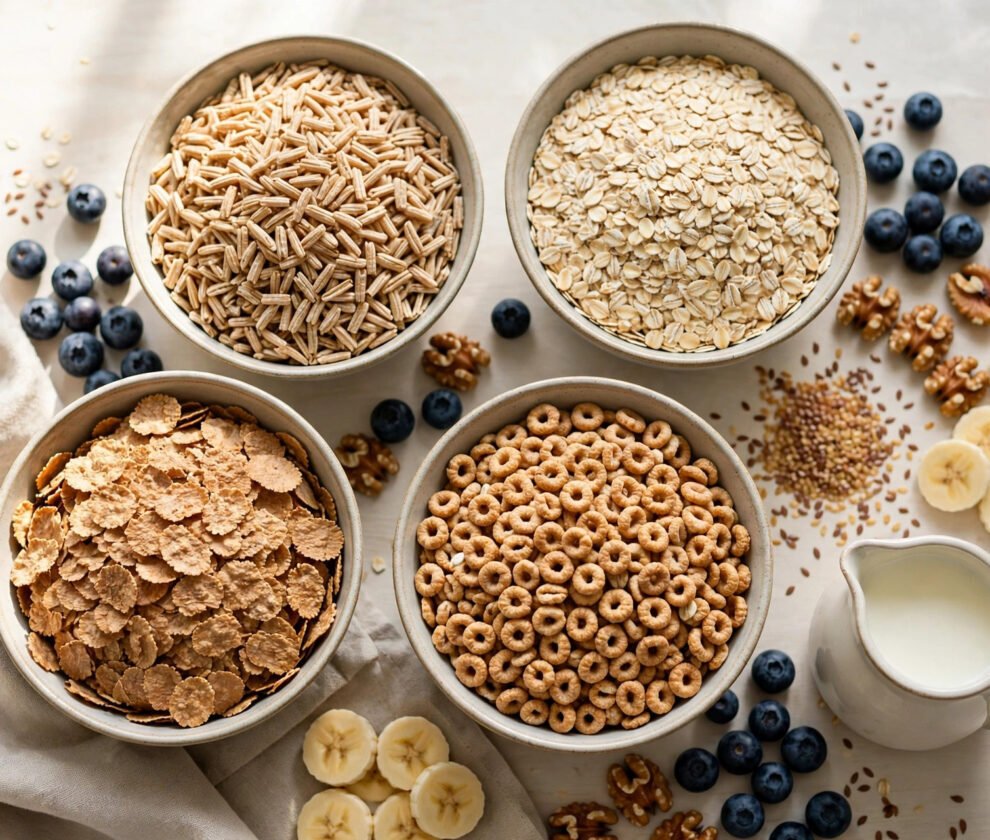
Oats are rich in beta-glucan, a soluble fiber that forms a gel and slows glucose absorption. Steel-cut and rolled oats have the slowest effect; instant oats are still useful when unsweetened. Build the bowl with milk or yogurt, nut butter, seeds, and fruit so the final meal includes protein and fat, not just carbohydrate.
4. Berries and other whole fruit
Berries, apples, pears, citrus, and stone fruit provide fiber, water, and natural sweetness that helps you skip added sugar. Whole fruit behaves very differently from juice: the intact fiber slows sugar release, and chewing adds satiety signals. Frozen berries are just as nutritious as fresh and make oatmeal and yogurt bowls affordable year-round.
5. Nuts, seeds, and nut butters
Walnuts, almonds, chia seeds, ground flaxseed, and pumpkin seeds bring healthy fats, fiber, magnesium, and plant protein in small, calorie-dense portions. A tablespoon or two is usually enough at breakfast. Nut butters spread on whole-grain toast with banana slices are a classic sustained-energy combination for a reason.
6. Avocado
Half an avocado adds fiber, potassium, and monounsaturated fat that pairs well with eggs and whole-grain toast. It also makes smoothies creamy without dairy. Because avocado is calorie-dense, a quarter to a half fruit is a sensible everyday portion for most people.
7. Whole-grain bread and tortillas
True whole-grain bread (first ingredient: whole wheat or whole grain, with at least 3 grams of fiber per slice) provides the complex-carbohydrate base for eggs, beans, cheese, or nut butter. Whole-grain tortillas do the same job for breakfast burritos with eggs, black beans, vegetables, and salsa.
8. Cottage cheese
Cottage cheese offers about 14 grams of protein per half cup and a mild flavor that works sweet (with fruit and cinnamon) or savory (with tomatoes, cucumber, and pepper). It is one of the most affordable high-protein breakfast foods and blends smoothly into eggs or smoothies if you dislike the texture.
9. Smoked salmon and other fish
Smoked salmon, sardines on toast, or leftover cooked fish bring protein plus omega-3 fats that support satiety. You do not need fish every day. Once or twice a week at breakfast is enough to broaden your nutrient intake, especially if lunch and dinner tend to be vegetarian.
10. Beans and lentils
Black beans, white beans, and lentils are fiber-and-protein powerhouses common in breakfast traditions worldwide — from beans on toast to lentil soups. A half cup of cooked beans adds roughly 7 grams of protein and 6 grams of fiber. They shine in burritos, savory oats, and egg scrambles.
11. Milk, kefir, and fortified alternatives
A glass of dairy milk provides about 8 grams of protein plus carbohydrate in a balanced ratio, which is why it works well after morning exercise. Kefir adds probiotics. If you choose plant milks, pick fortified, unsweetened versions and remember that most provide very little protein — pair them with another protein source.
12. Water, tea, and coffee (used wisely)
Fluids are not food, but they decide how your breakfast feels. Water first helps reverse overnight dehydration. Tea and coffee can support alertness, yet large amounts of caffeine on an empty stomach or sugary coffee drinks undermine steady energy. If you love coffee, have it with or after food and keep added sugar low.
7 Breakfast Combinations That Last 3 to 4 Hours
Use these as templates and swap ingredients to match your taste, budget, and culture. Each combination includes protein, fiber-rich carbohydrate, and healthy fat.
- Greek yogurt power bowl: plain Greek yogurt, rolled oats or granola with no added sugar, mixed berries, walnuts, and ground flaxseed.
- Eggs, beans, and toast: two eggs scrambled with spinach, black beans with cumin, and one slice of whole-grain toast with avocado.
- Overnight oats jar: rolled oats soaked in milk and yogurt with chia seeds, peanut butter, and banana — ready to grab from the fridge.
- Cottage cheese fruit plate: cottage cheese, sliced pear or peaches, a small handful of almonds, and whole-grain crackers.
- Salmon and egg toast: whole-grain toast, smoked salmon, a soft-boiled egg, cucumber, and lemon.
- Savory oat bowl: oats cooked in low-sodium broth, topped with a fried egg, sautéed greens, pumpkin seeds, and chili flakes.
- Breakfast burrito: whole-grain tortilla, scrambled eggs or tofu, beans, peppers, cheese, and salsa, with fruit on the side.
Portions should match your body size, activity, and hunger. A smaller person with a desk job and a taller person training in the morning will not need the same breakfast, and that is normal. Use fullness at the three-hour mark as your feedback: if you are comfortably hungry by lunch, the portion was right.
Foods That Spike and Crash Your Energy
You do not need to ban these foods forever. Just know that on their own, especially in large portions, they rarely sustain energy.
Sugary cereals and granola. Many granolas marketed as healthy contain as much sugar as dessert cereals. Check the label: added sugar in the first three ingredients and less than 3 grams of fiber per serving is a warning sign.
White bread, bagels, and pastries alone. Refined grains without protein or fat digest quickly. A bagel with eggs and cheese behaves very differently from a bagel with jam alone.
Fruit juice and smoothies with no protein. Juice removes most fiber. Large smoothies made only of fruit and juice can deliver 40 to 60 grams of sugar quickly. Add yogurt, milk, tofu, or protein-rich ingredients and keep fruit portions reasonable.
Sweetened coffee drinks. A large flavored latte can contain 300 to 500 calories and 40+ grams of sugar. It feels energizing for 30 minutes, then the crash arrives with interest.
Energy drinks and candy for breakfast. Caffeine plus sugar without nutrients is the fastest route to jittery energy followed by a slump. Save caffeine for after real food when possible.
How to Build a Sustained-Energy Breakfast in 2 Minutes
On busy mornings, use this three-part check instead of a recipe:
Pick a protein anchor — eggs, Greek yogurt, cottage cheese, milk, tofu, beans, or leftover chicken or fish. Add a fiber-rich carbohydrate — oats, whole-grain toast or tortilla, whole fruit, beans, or vegetables. Finish with a healthy fat — nuts, seeds, nut butter, avocado, olive oil, or cheese in a modest portion.
Add water, and eat seated when you can. Eating while distracted makes fullness harder to notice. The Centers for Disease Control and Prevention’s healthy eating guidance similarly emphasizes whole foods, fiber, and limiting added sugars and sugary drinks as foundations for stable daily energy (CDC Healthy Eating).
Prep helps enormously. Wash fruit, portion nuts, cook eggs or oats in batches, and keep yogurt and cottage cheese stocked. A breakfast you can assemble half-asleep is a breakfast you will actually eat.
Timing, Portions, and Special Situations
When and how much? Eat within a couple of hours of waking if that suits you, and aim for roughly 300 to 500 calories at breakfast, adjusted for body size, activity, and total daily needs. If you exercise early, a small snack before and a fuller breakfast after works well. Let hunger at the three-hour mark guide portions.
Diabetes and medication timing. Breakfast carbohydrate amount and timing interact with glucose management and some medications. The combinations in this article are general information. If you manage diabetes, kidney disease, or another condition, review portions with your care team before making major changes.
Frequently Asked Questions
What are the best breakfast foods for sustained energy if I have 5 minutes?
Greek yogurt with berries, walnuts, and oats; cottage cheese with fruit and almonds; or whole-grain toast with peanut butter, banana, and a glass of milk. Each gives you protein, fiber, and fat with no cooking.
How much protein do I need at breakfast for lasting energy?
Most adults feel best with about 15 to 30 grams. That looks like two eggs plus Greek yogurt, a cup of cottage cheese with fruit and nuts, or a burrito with eggs and beans. You do not need protein powder to reach it.
Are smoothies good for sustained energy?
They can be, if you build them like a meal: milk or yogurt or tofu for protein, oats or beans for fiber and thickness, fruit for flavor, and nut butter or seeds for fat. Fruit-and-juice-only smoothies digest too quickly to last.
Is coffee on an empty stomach bad for energy?
Many people tolerate it, but coffee without food raises alertness without providing fuel, and it can increase jitteriness and later cravings. Having coffee with or after a balanced breakfast usually produces steadier energy.
Can I get sustained energy from a vegetarian or vegan breakfast?
Yes. Combine beans or lentils, tofu or tempeh, soy milk or fortified alternatives, oats, whole grains, nuts, seeds, and fruit. Variety across the day covers amino acids and micronutrients like vitamin B12, which vegans should get from fortified foods or a supplement after advice from a clinician.
Conclusion
The best breakfast foods for sustained energy are not exotic or expensive. They are ordinary whole foods combined with intent: a protein anchor, a fiber-rich carbohydrate, and a healthy fat, plus water and whole fruit or vegetables for volume and micronutrients. Eggs and beans, yogurt and oats, cottage cheese and fruit, whole grains with nut butter — these combinations digest slowly, keep you full, and protect your focus through the morning.
Start with one template above, repeat it until it is automatic, then rotate. Notice how you feel at the three-hour mark and adjust portions, not perfection. Steady energy is a pattern, not a product, and breakfast is the easiest place to build it.
Health disclaimer: This article is for general information only and is not medical advice. Nutrition needs vary by age, health status, medications, and activity level. If you have diabetes, kidney disease, an eating disorder history, or another condition that affects your diet, talk with your doctor or a registered dietitian before making major changes to your eating pattern.

Comments(02)