

02 Oct
What to Eat for Breakfast When You Have No Time
Your alarm went off late, the kids need to be out the door in twenty minutes, and your first meeting starts the second you sit down. Breakfast feels impossible — so you skip it, grab coffee, and wonder why you’re ravenous and reaching for a pastry by 10 a.m. Sound familiar? You’re not lacking discipline; you’re lacking a plan. The good news is that a genuinely healthy breakfast doesn’t require cooking, a recipe book, or waking up earlier. With the right staples in your kitchen and a short list of quick healthy breakfast ideas, you can eat well in five minutes or less — sometimes in under sixty seconds. This guide gives you 15 fast options, a simple formula for building your own, a stock-up list, and a ready-made five-day rotation for your busiest weeks.
Why a Quick Breakfast Still Matters
Skipping breakfast occasionally isn’t a disaster, but making it a habit can work against you. Harvard Health’s breakfast guidance notes that a good breakfast should combine carbohydrates with fiber, a lean protein source such as eggs or yogurt, and healthy fats from foods like nuts — a mix linked to steadier energy and better appetite control through the morning. Meals built on refined carbs alone (a bagel, a muffin, a sugary cereal) digest quickly, spike blood sugar, and often leave you hungrier sooner than if you’d eaten something balanced.
Breakfast is also one of the easiest places to add fiber, a nutrient most adults under-eat. The CDC points out that fiber slows digestion and helps you feel fuller for longer, and suggests fiber-friendly breakfasts such as oatmeal with nuts and berries or avocado toast topped with chickpeas. Getting even 8–12 grams of fiber at breakfast sets you up to hit the recommended 22–34 grams per day without thinking about it again. Add protein on top of that fiber and you have the two most powerful levers for staying full until lunch — no willpower required.
The 5-Minute Breakfast Formula That Keeps You Full
Every idea below follows the same simple formula. Memorize it once and you can improvise a balanced breakfast from almost any kitchen:
- Protein (aim for 15–25 grams): Greek yogurt, eggs, cottage cheese, milk, nut butter, or leftover chicken. Protein slows digestion and is the single biggest factor in how long breakfast keeps you satisfied.
- A fiber-rich carb: Rolled oats, whole-grain bread, a whole-wheat tortilla, fruit, or a high-fiber cereal. Whole grains and fruit release energy gradually instead of all at once.
- A healthy fat: Nuts, seeds, nut butter, or avocado. Fat adds staying power and helps you absorb fat-soluble vitamins from the rest of the meal.
- Produce, whenever possible: A banana, a handful of berries, spinach in a smoothie, or sliced tomato on toast. Even one serving at breakfast makes the rest of the day’s nutrition easier.
Hit any three of the four and you’ll have a breakfast that outperforms most café pastries — in less time than the coffee line takes. If meal-sized protein at breakfast is your main challenge, our guide to high-protein breakfast ideas goes deeper on hitting your targets.
15 Fast Breakfast Ideas When You Have No Time
The ideas are grouped by how much effort they take on the morning itself: zero-effort grab-and-go options, two-to-five-minute assemblies, and make-ahead breakfasts you prepare once and eat all week.
Grab-and-Go: Zero Cooking, Out the Door
1. Greek yogurt cup with berries and walnuts. Take a single-serve plain Greek yogurt, throw in a handful of fresh or frozen berries, and add a small handful of walnuts. Roughly 18 grams of protein, ready in 30 seconds, and you can eat it at your desk. Choose plain over flavored to keep added sugar near zero — the berries do the sweetening.
2. Banana plus a handful of nuts. The original fast breakfast. A banana with a quarter-cup of almonds, walnuts, or mixed nuts gives you potassium, fiber, healthy fats, and around 6–8 grams of protein. It’s not the highest-protein option, so pair it with a glass of milk or a yogurt later in the morning if you’ll be active.
3. Hard-boiled eggs and a piece of fruit. Boil a batch of eggs on Sunday and breakfast is solved for days. Two eggs deliver about 12 grams of protein; add an apple or orange for fiber and vitamin C. Peel the eggs the night before if your mornings are truly chaotic.
4. Cottage cheese with pineapple or peaches. Cottage cheese is quietly one of the highest-protein quick breakfasts — about 24 grams per cup. Single-serve cups with fruit are shelf-stable in the fridge for weeks, making this the ultimate backup breakfast for mornings when everything else runs out.
5. A protein smoothie you blend and run with. Milk or Greek yogurt, frozen fruit, a spoonful of peanut butter, and a handful of spinach you won’t even taste. Blend for 45 seconds and drink it in the car. Our homemade protein shake recipes include several five-ingredient versions built exactly for this.
Ready in 2–5 Minutes
6. Peanut butter banana toast. Whole-grain toast, two tablespoons of natural peanut butter, sliced banana, and a sprinkle of cinnamon or chia seeds. About 12 grams of protein and a genuinely satisfying crunch — faster than the toaster takes to pop.
7. Microwave scrambled eggs in a mug. Crack two eggs into a mug with a splash of milk, microwave 90 seconds, stir, then 30 more seconds. Add a handful of spinach or a slice of cheese before the final round. Mug eggs taste freshly cooked because they are — with almost no washing up.
8. Instant oatmeal, upgraded. Plain instant oatmeal is a fine base but light on protein. Stir in a spoonful of Greek yogurt or nut butter, add berries and cinnamon, and you’ve turned a 150-calorie packet into a balanced meal with staying power.
9. Avocado toast with an egg. Smash half an avocado on whole-grain toast, add chili flakes and lemon, and top with a fried, poached, or leftover hard-boiled egg. The fiber-plus-protein combination is exactly the pattern the CDC recommends for a filling start to the day.
10. High-fiber cereal done right. Choose a cereal with at least 5 grams of fiber and under 8 grams of sugar per serving, use milk (dairy or soy for the most protein), and top with sliced fruit and a tablespoon of seeds. It’s the breakfast you had as a kid, rebuilt to actually keep you full.
Make-Ahead: Prep Once, Eat All Week
11. Overnight oats. Stir oats, milk, yogurt, and chia seeds in a jar at night; eat straight from the fridge in the morning. Our collection of overnight oats recipes includes ten flavor variations, from peanut butter banana to apple pie spice, all built on one five-minute base formula.
12. Egg muffins (mini frittatas). Whisk eggs with chopped vegetables and cheese, bake in a muffin tin for 18–20 minutes, and refrigerate. Two muffins reheat in 40 seconds and give you a hot, high-protein breakfast all week. They freeze well too.
13. Chia seed pudding. Three tablespoons of chia seeds in three-quarters of a cup of milk, left overnight, becomes a thick pudding with about 10 grams of fiber. Top with fruit and nuts in the morning. The omega-3s and soluble fiber also support the digestive benefits we cover in our gut health foods guide.
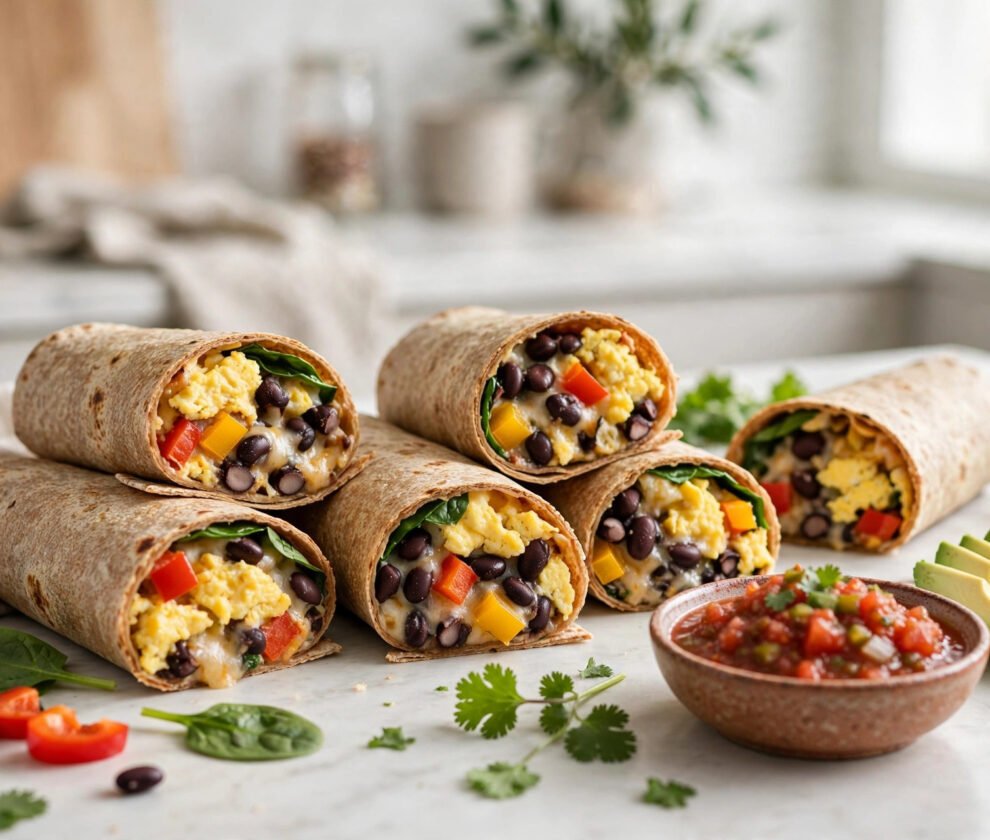
14. Breakfast burritos from the freezer. Scramble eggs with black beans, peppers, and a little cheese; wrap in whole-wheat tortillas; freeze individually. Microwave for two minutes and you have a hot, portable breakfast with around 18 grams of protein.
15. Baked oatmeal squares. Bake a tray of oatmeal with milk, eggs, fruit, and nuts on Sunday; cut into squares. Each square reheats in 30 seconds or travels in a lunch bag to eat cold. It’s meal-prep breakfast at its most forgiving — the recipe tolerates almost any fruit or nut swap.
Stock These 10 Staples and Breakfast Is Always Solved
Quick breakfasts are really a shopping problem, not a cooking problem. Keep these ten items in the house and at least five of the ideas above are always available:
- Plain Greek yogurt (single-serve cups for true emergencies)
- Eggs — plus a Sunday batch of hard-boiled eggs in the fridge
- Rolled oats and plain instant oatmeal packets
- Whole-grain bread and whole-wheat tortillas in the freezer
- Natural peanut or almond butter
- Chia seeds, ground flaxseed, or hemp seeds
- Mixed nuts and walnuts
- Bananas and whatever berries are in season (frozen works perfectly)
- Milk or a protein-fortified plant milk
- Cottage cheese cups as a long-life backup
Notice what this list doesn’t need: specialty products, expensive powders, or a trip to a health-food store. A regular weekly grocery shop covers all of it, aligning with Harvard Health’s advice to build a better breakfast from whole grains, healthy protein sources, and unsaturated fats rather than from marketed “breakfast products.”
Quick Breakfasts to Limit on Busy Mornings
Some fast breakfasts are fast in the wrong way — they’re mostly refined carbs and sugar, so they digest quickly and set up a mid-morning crash. You don’t need to ban them, but know what you’re choosing:
- Pastries, muffins, and donuts: Typically 300–500 calories with very little protein or fiber. Fine as an occasional treat; a poor daily foundation.
- Sugary cereals: Some contain more sugar per serving than a dessert. If cereal is your habit, the upgraded version in idea #10 keeps the convenience without the crash.
- Fruit juice as “breakfast”: Juice removes the fiber that makes whole fruit filling. Harvard Health’s breakfast guidance consistently favors whole fruit over juice for exactly this reason. Eat the orange; don’t just drink it.
- Processed breakfast meats alone: Sausage and bacon bring protein but also high sodium and saturated fat. Once or twice a week alongside eggs and produce is a reasonable pattern; every day is harder to justify.
- Coffee alone: Caffeine can blunt appetite for an hour or two, but it provides no nutrients and the hunger returns with interest. If you love your morning coffee, simply add a banana and a handful of nuts alongside it.
Your 5-Day No-Time Breakfast Rotation
Decision fatigue is half the battle. Here’s a ready-made weekday plan using only the ideas above — total morning effort: under five minutes a day.
- Monday: Overnight oats jar (prepped Sunday night)
- Tuesday: Greek yogurt with berries and walnuts
- Wednesday: Peanut butter banana toast plus a glass of milk
- Thursday: Two egg muffins reheated, plus a banana
- Friday: Protein smoothie with spinach, frozen fruit, and yogurt
Rotate the flavors weekly — swap the oats topping, the smoothie fruit, the nut butter — and the plan never gets boring. For broader morning inspiration across the whole week, bookmark our high-protein breakfast ideas and pull one new option in each Sunday.
Frequently Asked Questions
Is it okay to skip breakfast if I’m not hungry in the morning?
For most healthy adults, an occasional skipped breakfast is not harmful, and some people genuinely prefer eating later. The problem is the pattern: if skipping leads to intense hunger, vending-machine snacks, or overeating at lunch, a small fast breakfast serves you better. Start with something tiny — a yogurt cup or a banana with nuts — rather than forcing a full meal.
What is the fastest healthy breakfast of all?
A Greek yogurt cup with a handful of berries and nuts takes under a minute and delivers protein, fiber, and healthy fats. A close second is two pre-cooked hard-boiled eggs with a piece of fruit. Both require zero morning preparation if you’ve stocked the staples list above.
How much protein should breakfast have?
A practical target is 15–25 grams, which is enough to noticeably reduce mid-morning hunger for most people. Greek yogurt, eggs, cottage cheese, and milk-based smoothies reach that range easily. You don’t need to hit a precise number daily — consistently including a real protein source matters more than exact grams.
Can I eat the same quick breakfast every day?
Nutritionally, a balanced repeat breakfast (like overnight oats or yogurt with berries) is perfectly fine and removes all decision-making. The only watch-out is variety over the whole day: if breakfast is identical daily, make sure lunch and dinner bring different vegetables, proteins, and grains across the week.
Are smoothies actually filling enough for breakfast?
They are if you build them right. A smoothie of just fruit and juice is mostly sugar and won’t hold you. Add Greek yogurt or milk, nut butter, oats or chia seeds, and frozen fruit, and you have a 350–450 calorie meal with protein and fiber that keeps most people full for three to four hours.
Conclusion
Having no time is not the same as having no options. With a stocked fridge, the five-minute formula — protein, fiber-rich carb, healthy fat, produce — and a handful of grab-and-go, two-minute, and make-ahead ideas, breakfast becomes the easiest meal of your day instead of the one you skip. Pick three ideas from this list, buy the staples this week, and notice how much steadier your mornings feel. Your 10 a.m. self will thank you.
Disclaimer: This article is for general informational purposes only and is not medical advice. If you have a medical condition such as diabetes, or specific dietary needs, consult your doctor or a registered dietitian before making significant changes to your eating routine.

Comment(01)