05 Oct
Cottage Cheese Breakfast Ideas High in Protein
Cottage cheese breakfast ideas high in protein are one of the easiest ways to start your day full, focused, and energized without spending a lot of time in the kitchen. One cup of cottage cheese typically provides about 24 to 28 grams of protein, along with calcium, phosphorus, and B vitamins — all in a mild, creamy base that works with both sweet and savory flavors. If you are tired of eggs, bored with protein shakes, or looking for a make-ahead breakfast that actually keeps you satisfied until lunch, cottage cheese deserves a permanent spot in your refrigerator.
In this guide, you will find simple sweet bowls, hearty savory toasts, fluffy pancakes, make-ahead cups, and practical tips for choosing the healthiest cottage cheese at the store. You will also learn how much protein you really get per serving, how cottage cheese compares with Greek yogurt, and how to build a balanced morning plate around it.
Why Cottage Cheese Is a High-Protein Breakfast Star
Cottage cheese is made by curdling milk and draining much of the whey, which concentrates the casein protein. Casein digests slowly, so it releases amino acids over several hours. That slow release is one reason people feel full longer after a cottage cheese breakfast than after a low-protein meal like plain toast or a pastry.
Nutrition Snapshot
According to USDA FoodData Central data summarized by the National Institutes of Health and major nutrition databases, a typical 1-cup (about 226 g) serving of 2% cottage cheese provides roughly:
- 180–200 calories
- 24–28 g protein
- 5–6 g fat (lower for 1% or fat-free versions)
- 6–10 g carbohydrates
- About 15–20% of daily calcium needs
Exact numbers vary by brand and fat level, so check the label. Harvard Health Publishing notes that fermented and cultured dairy foods can be a useful part of a balanced eating pattern, especially when you choose plain, lower-sodium options and pair them with fiber-rich foods like fruit, vegetables, and whole grains.
How It Compares With Greek Yogurt
Greek yogurt and cottage cheese are close cousins nutritionally. Greek yogurt often has slightly less sodium and a tangier taste, while cottage cheese usually offers a bit more protein per cup and a heartier texture. Many people rotate both through the week. If you already enjoy Greek yogurt breakfast bowls with fresh topping ideas, cottage cheese bowls will feel familiar — just swap the base and keep your favorite fruit, nuts, and seeds.
How to Choose the Best Cottage Cheese
Not all tubs are equal. Use these quick checks at the store:
- Plain over flavored: Flavored cottage cheese cups often add sugar. Choose plain and add your own fruit or honey.
- Check sodium: Cottage cheese can be high in sodium (often 600–900 mg per cup). Low-sodium varieties exist and are worth choosing if you have them available, especially if you eat it daily.
- Fat level: 2% or 4% tastes richer and may keep you fuller; 1% or fat-free lowers calories. All provide similar protein.
- Short ingredient list: Milk, cream, salt, and live cultures are typical. Fewer gums and additives is generally better.
- Curd size: Small curd blends smoother for pancakes and spreads; large curd is chunkier for bowls.
7 Cottage Cheese Breakfast Ideas High in Protein
Each idea below uses about 3/4 to 1 cup of cottage cheese as the base, giving you roughly 18 to 28 grams of protein before add-ins. Adjust portions to your appetite and goals.
1. Classic Berry Cottage Cheese Bowl
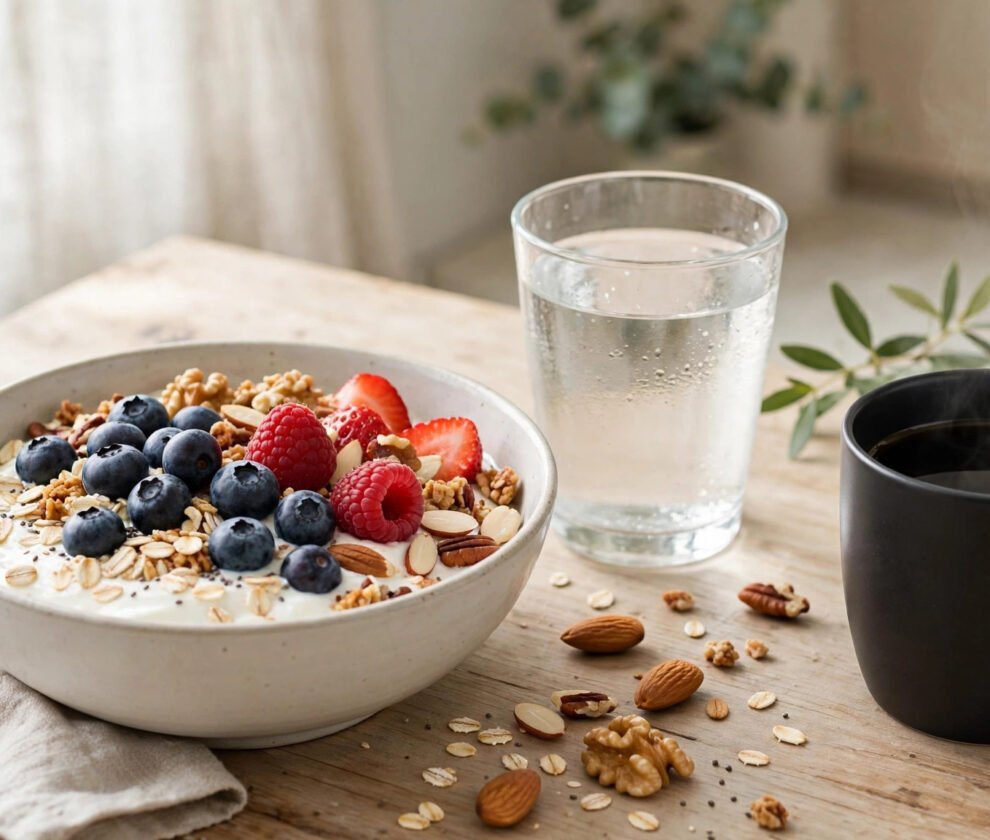
Spoon cottage cheese into a bowl and top with 1/2 cup mixed berries, 1 tablespoon chia seeds, and a small handful of chopped walnuts. The berries add vitamin C and fiber, the chia adds omega-3s, and the walnuts add healthy fats. This is the fastest option — no cooking, ready in three minutes.
Protein boost: Add 2 tablespoons of hemp seeds for about 6 extra grams of protein.
2. Savory Cottage Cheese Toast
Spread cottage cheese thickly on whole-grain toast and top with sliced tomato, cucumber, a drizzle of olive oil, flaky salt, and cracked black pepper. For a heartier version, add a sliced hard-boiled egg or smoked salmon. Whole grains add fiber and B vitamins, making this a genuinely balanced plate. If you want the simple framework behind balanced plates, see what a balanced breakfast looks like with a simple formula.
3. Cottage Cheese Pancakes (Blended and Fluffy)
Blend 1 cup cottage cheese, 1 cup rolled oats, 2 eggs, 1 teaspoon vanilla, and 1/2 teaspoon baking powder until smooth. Cook small pancakes on a lightly oiled skillet over medium heat, about 2 minutes per side. Blending removes the curd texture completely, so even cottage cheese skeptics enjoy these. Serve with fresh fruit instead of syrup to keep added sugar low.
These also reheat well, so make a double batch on Sunday and warm them through the week — similar in spirit to overnight oats recipes for busy mornings that reward a little weekend prep.
4. Peach and Honey Cottage Cheese Bowl
Top cottage cheese with sliced fresh or thawed frozen peaches, a teaspoon of honey, and a sprinkle of cinnamon. Peaches provide potassium and fiber, and cinnamon adds warm flavor without calories. In winter, swap peaches for diced pear or baked apples.
5. Cottage Cheese Egg Scramble
Whisk 2 eggs with 1/3 cup cottage cheese and scramble gently in a nonstick pan. The cottage cheese melts into soft, creamy curds and adds protein without making the eggs watery if you cook them just until set. Add spinach, mushrooms, or bell peppers for extra vegetables. Serve with whole-grain toast or fruit.
6. Cottage Cheese Parfait Cups (Make-Ahead)
Layer cottage cheese, berries, and low-sugar granola in small jars. Keep the granola separate or add it just before eating so it stays crunchy. These cups keep 3 to 4 days in the refrigerator and are perfect for grab-and-go mornings when you would otherwise skip breakfast entirely. For more no-cook morning inspiration, browse high-protein breakfast ideas that go beyond eggs.
7. Mediterranean Savory Bowl
Top cottage cheese with diced cucumber, cherry tomatoes, olives, a drizzle of extra-virgin olive oil, and a pinch of oregano or za’atar. Add a slice of whole-grain pita on the side. This savory, crunchy bowl is refreshing in warm weather and provides healthy monounsaturated fats from the olive oil.
Tips to Make Cottage Cheese Breakfasts Work for You
If You Do Not Love the Texture
Blend it. Whipped cottage cheese becomes smooth and spreadable in a food processor in about 30 seconds. Use it anywhere you would use ricotta or cream cheese — on toast, in pancakes, or as a dip base. Blending also makes it easier to sneak into scrambled eggs and oatmeal.
Add Fiber and Stay Full Longer
Protein alone is not the whole story. Pair cottage cheese with fiber-rich foods — berries, pears, whole grains, chia, flax, or vegetables — to slow digestion and steady blood sugar. Most adults benefit from aiming for fiber at every meal, and breakfast is often the easiest place to add it.
Watch Portions Without Obsessing
A typical satisfying serving is 3/4 to 1 cup of cottage cheese plus toppings. If you are using cottage cheese as a snack rather than a meal, 1/2 cup is plenty. Listen to fullness cues rather than forcing a set amount every day.
Make It Travel-Friendly
Single-serve cottage cheese cups are widely available and travel well in a lunch bag with an ice pack. Add a small container of fruit or nuts and you have a complete breakfast at your desk or on the train.
Who Should Be Careful With Cottage Cheese?
Cottage cheese is nutritious for most people, but a few situations deserve attention:
- Lactose sensitivity: Cottage cheese contains less lactose than milk, and many people tolerate it well, but start with a small portion if you are unsure. Lactose-free versions are available.
- Sodium concerns: If your clinician has advised you to limit sodium, choose low-sodium cottage cheese and balance the rest of your day with fresh, low-sodium foods.
- Milk allergy: Cottage cheese is a dairy food and is not suitable for people with a milk allergy. Plant-based alternatives vary widely in protein, so check labels carefully.
- Kidney conditions: People on protein-restricted plans for kidney disease should follow their clinician’s guidance on total daily protein.
The World Health Organization emphasizes balanced dietary patterns built around whole foods, adequate protein, fruits, vegetables, and whole grains. Cottage cheese fits comfortably into that pattern when portions and sodium are kept in check.
Frequently Asked Questions
How much protein is in cottage cheese for breakfast?
One cup of cottage cheese provides about 24 to 28 grams of protein, depending on the brand and fat percentage. A 3/4-cup serving provides roughly 18 to 21 grams, which covers a large share of most adults’ breakfast protein needs.
Is cottage cheese healthier than Greek yogurt?
Both are excellent high-protein choices. Cottage cheese usually offers slightly more protein per cup and a heartier texture, while Greek yogurt is often lower in sodium and provides probiotics. Rotating both gives you variety without sacrificing nutrition.
Can I eat cottage cheese every day for breakfast?
For most healthy adults, yes — especially if you choose plain, lower-sodium varieties and pair them with fruit, vegetables, and whole grains. Variety across the week is still helpful for covering different nutrients, so alternate with eggs, oatmeal, or Greek yogurt when you like.
Does cottage cheese help with weight management?
Its high protein and slow-digesting casein can help you feel full longer, which may make it easier to avoid mid-morning snacking. It is not a weight-loss food on its own, but as part of an overall balanced eating pattern, it is a practical, satisfying choice.
What can I mix with cottage cheese if I do not like it plain?
Try fresh fruit, cinnamon, vanilla extract, nut butter, tomatoes and olive oil for a savory version, or blend it smooth into pancakes and scrambles. Blending completely changes the texture and removes the curd pieces many people dislike.
Conclusion
Cottage cheese breakfast ideas high in protein are simple, affordable, and endlessly flexible. Whether you prefer a sweet berry bowl, a savory Mediterranean toast, or blended pancakes you can prep ahead, cottage cheese gives you 18 to 28 grams of protein with minimal cooking and plenty of room to customize. Start with one or two ideas this week, note which flavors keep you full longest, and build your own rotation from there. A satisfying, protein-rich morning really can be this easy.
Disclaimer: This article is for general educational purposes only and is not medical advice. It does not replace guidance from your doctor, registered dietitian, or other qualified health professional. If you have a medical condition, food allergy, or specific dietary needs, please consult a healthcare professional before making significant changes to your diet.