01 Oct
Curious about the Mediterranean diet for beginners? In short: it is a flexible, enjoyable eating pattern based on vegetables, fruits, whole grains, legumes, olive oil, fish, and nuts — consistently linked in research to better heart health and healthy weight management. This complete guide explains what the Mediterranean diet is, what to eat and avoid, and gives you a simple 7-day meal plan to start this week.
What Is the Mediterranean Diet?
The Mediterranean diet is inspired by the traditional eating habits of countries bordering the Mediterranean Sea, such as Greece, Italy, and Spain. Importantly, it is not a strict “diet” with rigid rules or calorie counting — it is a pattern of eating that emphasizes whole, minimally processed foods.
Large studies, including the well-known PREDIMED trial, have associated this eating pattern with a lower risk of heart disease and stroke. The WHO’s healthy diet fact sheet echoes the same principles: plenty of fruits and vegetables, whole grains, and healthy fats while limiting salt, sugar, and highly processed foods.
Foods to Eat on the Mediterranean Diet
Build most of your meals around these staples:
- Vegetables: leafy greens, tomatoes, peppers, broccoli, carrots, cucumbers
- Fruits: berries, apples, oranges, grapes, figs — eaten fresh, not juiced
- Whole grains: oats, brown rice, quinoa, whole-wheat bread and pasta
- Legumes: lentils, chickpeas, black beans, peas
- Healthy fats: extra-virgin olive oil as your main cooking fat, plus nuts and seeds
- Fish and seafood: salmon, sardines, mackerel, tuna — at least twice a week
- Poultry and eggs: in moderate amounts
- Dairy: yogurt and cheese in modest portions
- Herbs and spices: garlic, basil, oregano, turmeric — flavor instead of salt
Foods to Limit or Avoid
- Sugary drinks, sweets, and pastries
- Highly processed snacks and fast food
- Processed meats (sausages, bacon, deli meats)
- Refined grains (white bread, sugary cereals)
- Butter and other saturated-fat-heavy spreads — use olive oil instead
- Excessive alcohol; if you drink, keep it moderate and occasional
You do not need to eliminate these forever. The Mediterranean approach is about mostly eating the good stuff, not perfection.
Simple 7-Day Mediterranean Meal Plan
This beginner-friendly plan uses affordable, easy-to-find ingredients. Adjust portions to your appetite and activity level.
| Day | Breakfast | Lunch | Dinner |
|---|---|---|---|
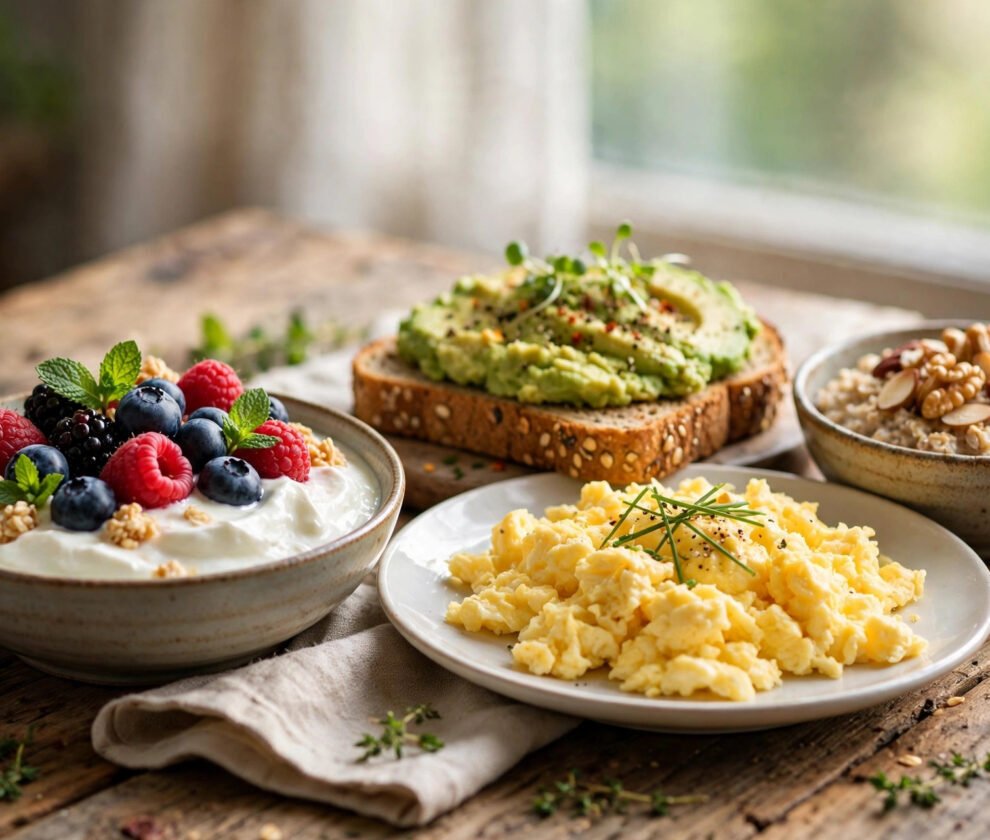
| Monday | Greek yogurt with berries and walnuts | Lentil soup with whole-grain bread | Grilled salmon, roasted vegetables, quinoa |
| Tuesday | Oatmeal with sliced banana and almonds | Chickpea salad with olive oil and lemon | Whole-wheat pasta with tomato, garlic, and spinach |
| Wednesday | Whole-grain toast with avocado and egg | Tuna and white-bean salad | Baked chicken with herbs, brown rice, steamed broccoli |
| Thursday | Smoothie with yogurt, mango, and spinach | Vegetable and barley soup | Sardines on whole-grain toast with a big green salad |
| Friday | Greek yogurt with honey and pistachios | Hummus wrap with grilled vegetables | Mackerel with roasted peppers and couscous |
| Saturday | Veggie omelet with feta cheese | Quinoa tabbouleh with chickpeas | Lentil and vegetable stew with crusty whole-grain bread |
| Sunday | Overnight oats with apple and cinnamon | Greek salad with olives and feta | Herb-roasted chicken thighs, sweet potato, green beans |
Mediterranean Diet Benefits: What the Research Shows
The Mediterranean diet is one of the most studied eating patterns in nutrition science, and the findings are consistently positive. The landmark PREDIMED trial found that a Mediterranean diet supplemented with extra-virgin olive oil or nuts was associated with roughly a 30% lower risk of major cardiovascular events compared with a low-fat control diet. Other research has linked the pattern to better blood-sugar control, healthier cholesterol levels, and slower cognitive decline with aging.
Why does it work so well? Scientists point to the combination: fiber from vegetables, legumes, and whole grains feeds beneficial gut bacteria; monounsaturated fats from olive oil and nuts support heart health; and the overall pattern is naturally low in the added sugars and refined starches that drive inflammation. No single “superfood” is responsible — it is the pattern that delivers results, which is exactly why it is sustainable for life rather than a 30-day challenge.
Your First Mediterranean Grocery List
Keep it simple for week one. You do not need specialty stores — a regular supermarket covers everything:
- Produce: spinach, tomatoes, cucumbers, bell peppers, broccoli, lemons, apples, berries, bananas
- Pantry: extra-virgin olive oil, brown rice, rolled oats, whole-wheat pasta, canned chickpeas, red lentils, canned tuna or sardines
- Dairy and eggs: plain Greek yogurt, feta cheese, a dozen eggs
- Nuts and flavor: walnuts, almonds, garlic, dried oregano, black pepper
- Protein for the week: salmon or mackerel fillets (fresh or frozen), chicken thighs
With these basics on hand, you can assemble nearly every meal in the 7-day plan above without extra shopping trips.
5 Tips to Start This Week
- Swap your cooking fat: replace butter with extra-virgin olive oil for sautéing and dressings.
- Add one vegetable to every meal: even a handful of spinach or sliced tomatoes counts.
- Go meatless twice a week: try lentil soup or chickpea curry — cheap, filling, and nutritious. If mornings are your weak point, our high-protein breakfast ideas fit perfectly into this pattern.
- Snack smarter: keep nuts, fruit, and yogurt on hand instead of chips and biscuits.
- Eat mindfully: Mediterranean cultures value relaxed, social meals. Slow down, chew well, and notice when you are satisfied.
Common Beginner Mistakes
Mistake 1: Drowning everything in olive oil. It is healthy, but still calorie-dense — 1–2 tablespoons per meal is plenty. Mistake 2: Eating huge portions of pasta and bread. Whole grains are part of the pattern, but vegetables should fill half your plate. Mistake 3: Treating it as a short-term diet. The benefits come from long-term habits, so choose changes you can maintain. For more structured eating strategies, you may also like our 16:8 intermittent fasting guide for beginners.
Frequently Asked Questions
Is the Mediterranean diet good for weight loss?
It can support gradual, sustainable weight loss because it is rich in fiber and healthy fats that keep you full, while naturally crowding out ultra-processed foods. Research on obesity and overweight from WHO consistently shows that whole-food eating patterns outperform crash diets. For targeted strategies, see our guide to lose belly fat naturally.
Can vegetarians follow the Mediterranean diet?
Easily — the diet is already plant-heavy. Vegetarians can lean on legumes, lentils, chickpeas, nuts, eggs, yogurt, and cheese for protein, and simply skip the fish and poultry portions of the plan.
Is the Mediterranean diet expensive?
It does not have to be. Lentils, beans, oats, seasonal vegetables, and frozen fish are all budget-friendly. Olive oil costs more than refined oils, but a bottle lasts a long time when used at 1–2 tablespoons per meal.
How quickly will I see results?
Most people notice better digestion and steadier energy within 2–3 weeks. Meaningful changes in weight, cholesterol, or blood pressure typically take 2–3 months of consistent eating. This is a lifestyle, not a 30-day fix.
Do I need to count calories on the Mediterranean diet?
No — that is one of its strengths. Focus on food quality, reasonable portions, and eating until satisfied rather than stuffed. If weight loss stalls, reviewing portion sizes (especially of oils, nuts, and grains) is the first step. Browse more nutrition guides for related meal ideas.
Conclusion
The Mediterranean diet for beginners comes down to a simple formula: vegetables and fruit at every meal, whole grains and legumes daily, olive oil as your main fat, fish twice a week, and minimal processed food. Start with the 7-day plan above, make one or two swaps this week — olive oil instead of butter, nuts instead of chips — and build from there. Small, consistent changes beat dramatic overhauls every time.
General health information only — not medical advice. Talk to a qualified professional about personal health decisions. See our Disclaimer.