01 Oct
Intermittent fasting for beginners can sound intimidating, but the most popular method — 16/8 — is surprisingly simple: you fast for 16 hours and eat all your meals within an 8-hour window each day. There is no special food to buy and no complicated rules. You simply skip breakfast (or dinner), eat balanced meals during your window, and let your body rest from digestion the rest of the time. Many beginners choose 16/8 because it mostly overlaps with sleep, making the fast far easier than it sounds.
In this guide, you will learn exactly how the 16/8 method works, see a sample daily schedule, discover what to eat and drink, get 7 practical beginner tips, and learn who should be cautious before starting.
What Is Intermittent Fasting?
Intermittent fasting (IF) is an eating pattern that cycles between periods of eating and fasting. It is not a diet in the traditional sense — it does not tell you what to eat, but when to eat. During the fasting window, insulin levels fall and the body shifts toward using stored energy, which is why many people use IF to support weight management.
Several methods exist — 5:2 (eating normally five days, restricting calories two days), alternate-day fasting, and OMAD (one meal a day) — but 16/8 is the gentlest starting point and the one most beginners stick with.
How the 16/8 Method Works
The concept is straightforward: each 24-hour day is split into a 16-hour fast and an 8-hour eating window. The most common schedule is 12:00 PM to 8:00 PM for eating, which means you skip breakfast, eat lunch and dinner normally, and stop eating after 8 PM. Since you sleep through roughly half the fast, the waking fasting time is only about 8 hours.
During the 16 fasting hours, you consume zero or near-zero calories: water, black coffee, and plain tea are all fine. During the 8-hour window, you eat two or three satisfying, nutritious meals. The method works mainly because the shorter window naturally helps many people eat fewer total calories — and consistency matters more than perfection.
Sample 16/8 Daily Schedule
Here is a realistic beginner schedule with an eating window of 12:00 PM – 8:00 PM:
| Time | What to Do | Details |
|---|---|---|
| 7:00 AM | Wake up, hydrate | Large glass of water; black coffee or plain tea if you like |
| 7:00 AM – 12:00 PM | Fasting continues | Water, black coffee, or herbal tea only; stay busy — mornings pass quickly |
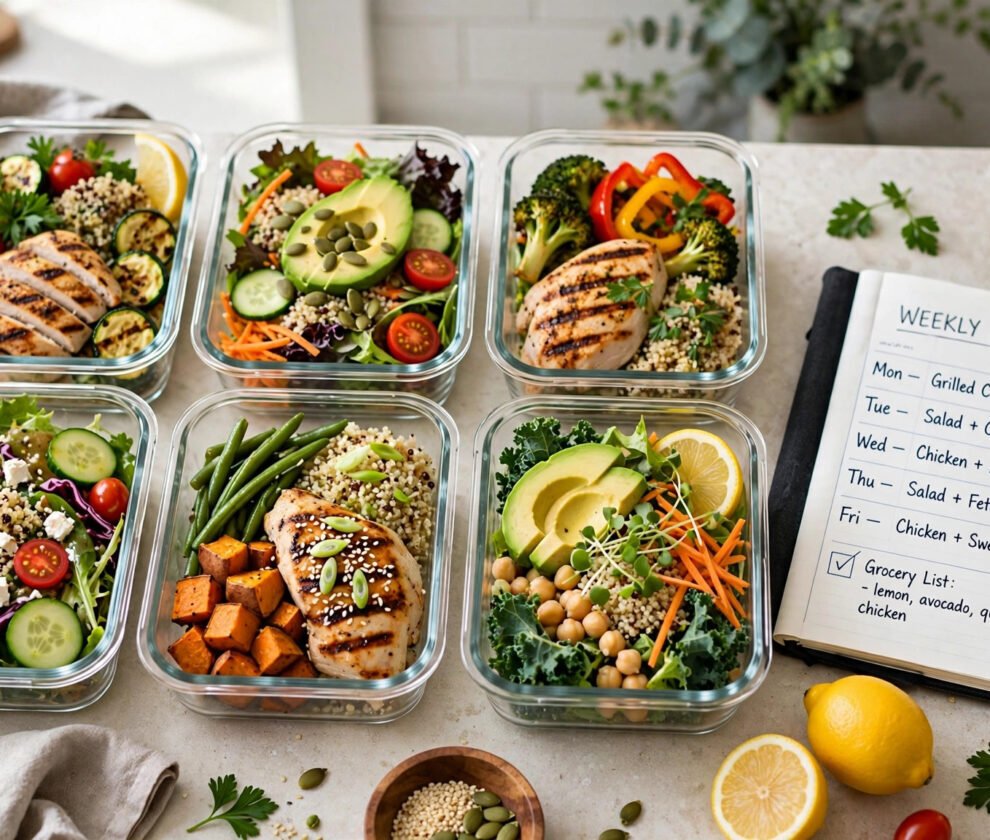
| 12:00 PM | Break your fast — Lunch | Balanced meal: protein + vegetables + whole grains (e.g., grilled chicken salad with quinoa) |
| 3:30 PM | Healthy snack (optional) | Greek yogurt, a handful of nuts, or fruit |
| 7:30 PM | Dinner | Similar balance to lunch: fish or lentils with vegetables and brown rice |
| 8:00 PM | Eating window closes | Kitchen “closed” — herbal tea or water only from here |
| 10:30 PM | Wind down for sleep | Screens off, calm routine — good sleep supports fasting success |
Prefer mornings? Flip it: eat 8:00 AM – 4:00 PM and fast through the evening. Choose the window that fits your life — the best schedule is the one you can repeat daily.
What to Eat During Your Eating Window
Fasting does not cancel out poor food choices. For the best results and steady energy, build meals around whole foods following WHO healthy diet principles:
- Protein at every meal: eggs, lentils, beans, chicken, fish, tofu, Greek yogurt — protein keeps you full through the next fast. These high-protein breakfast ideas adapt well as first meals of the day.
- Plenty of vegetables and fruit: fiber-rich produce improves satiety and gut health.
- Whole grains: oats, brown rice, quinoa, and whole-wheat bread over refined versions.
- Healthy fats: nuts, seeds, olive oil, and avocado in moderate amounts.
- Limit: sugary drinks, sweets, deep-fried snacks, and heavily processed foods — they make the fasting window harder by spiking and crashing your energy.
A Mediterranean-style pattern pairs especially well with 16/8 — see our Mediterranean diet beginner’s guide for meal ideas that fit naturally into an eating window.
What You Can Drink While Fasting
- Water — plain or sparkling, as much as you like.
- Black coffee — no sugar, milk, or cream during the fast (a splash of milk likely will not ruin results, but strict fasting avoids it).
- Plain tea — green, black, or herbal, unsweetened.
- Avoid: sodas (even diet sodas can trigger cravings for some people), juices, smoothies, and bulletproof-style calorie coffees during fasting hours.
7 Tips for Beginners
- Ease in gradually. Start with a 12-hour fast (8 PM – 8 AM) for a few days, then stretch to 14, then 16 hours. There is no prize for suffering on day one.
- Stay hydrated. Thirst often disguises itself as hunger. Keep water within reach all morning.
- Keep busy during fasting hours. Mornings filled with work or a walk pass far faster than idle ones.
- Do not overeat when the window opens. Break your fast with a normal, balanced meal — not a feast. Bingeing erases the calorie benefit.
- Keep protein high. Adequate protein protects muscle and keeps you satisfied longer into the fast.
- Be flexible, not rigid. A social dinner that shifts your window occasionally will not ruin progress. Aim for consistency, roughly 5–6 days a week.
- Give it 2–3 weeks. The first week is the hardest as hunger hormones adjust. Most people find weeks two and three dramatically easier.
Who Should Be Careful With Fasting
Intermittent fasting is not suitable for everyone. Talk to your doctor before starting if you are pregnant or breastfeeding, have diabetes (especially if you take glucose-lowering medication), have a history of eating disorders, take prescription medications affected by food timing, are under 18, or have any chronic health condition. If you feel dizzy, unwell, or develop an unhealthy relationship with food, stop and seek professional guidance. Fasting should feel manageable — never punishing.
Frequently Asked Questions
Will I lose muscle with 16/8 fasting?
Not if you eat enough protein and stay active. Studies on time-restricted eating show that muscle is largely preserved when protein intake is adequate and people do some resistance exercise. Keep protein at every meal and consider strength training twice a week.
Can I exercise while fasting?
Yes — light to moderate exercise like walking, yoga, or easy cardio is fine fasted for most people, and some prefer it. For intense strength sessions, many do better training inside or near the eating window. Listen to your body and hydrate well.
Does black coffee break a fast?
Plain black coffee (no sugar, milk, or cream) has negligible calories and is widely considered fine during a fast — and the caffeine can mildly blunt morning hunger. Flavored creamers and sugary additions do break the fast.
What if I feel very hungry during the fast?
Some hunger in the first week is normal as your body adjusts. Drink water or tea, stay busy, and see if it passes within 20–30 minutes — it usually does. Persistent, intense hunger may mean your eating-window meals are too small or too low in protein and fiber; adjust those first.
Is 16/8 better than simply eating less?
For fat loss, what matters most is overall calorie balance and food quality — 16/8 is simply a structure that helps many people achieve that with less decision fatigue. If the window feels miserable, a regular balanced eating pattern works just as well. For more on sustainable fat loss, see our guide on how to lose belly fat naturally and the NHLBI’s guidance on overweight and obesity.
Conclusion
The 16/8 method makes intermittent fasting beginner-friendly: fast for 16 hours (mostly while you sleep), eat balanced meals in an 8-hour window, drink water/coffee/tea while fasting, and keep protein and whole foods high. Start gradually, stay consistent, and remember it is a tool — not a religion.
Your next step: try a 12-hour overnight fast tonight (finish dinner by 8 PM, eat breakfast at 8 AM), then stretch the window over the coming week. Browse our Weight Management section for more sustainable strategies.
General health information only — not medical advice. Talk to a qualified professional about personal health decisions. See our Disclaimer.