01 Oct
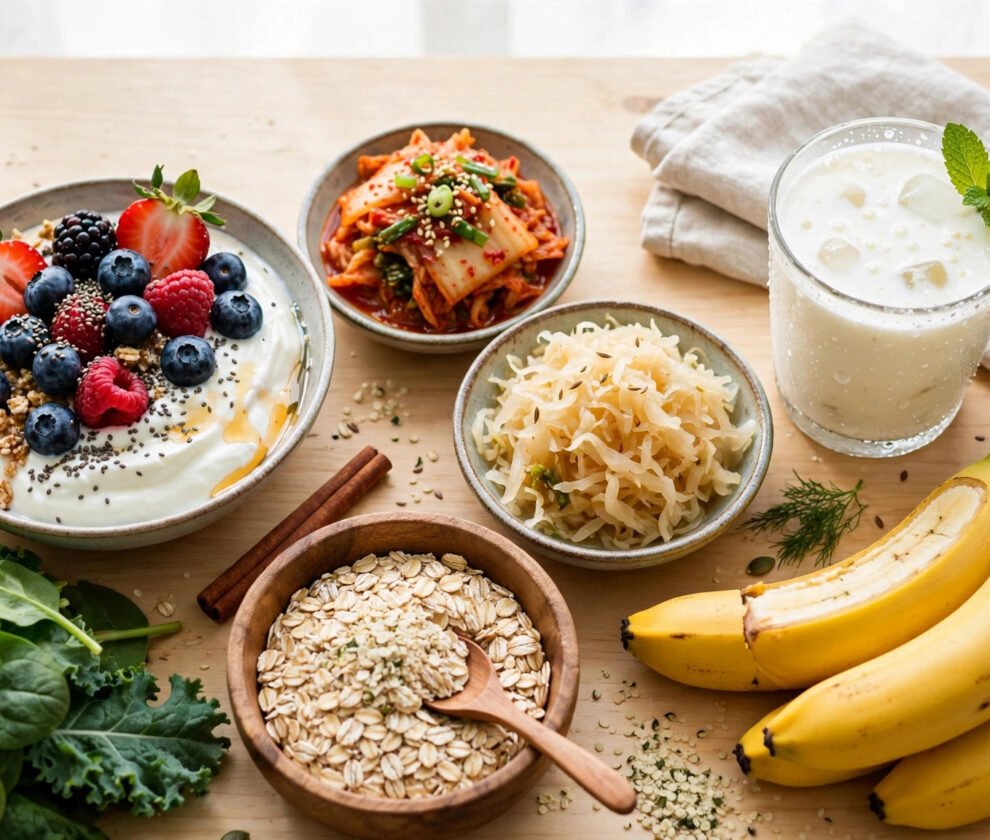
Wondering which foods for gut health are actually worth adding to your plate? The short answer: fermented foods like yogurt, kefir, and kimchi, plus fiber-rich foods like oats, beans, leafy greens, and berries, are among the best-supported choices for a healthy digestive system. In this guide, you will discover 10 of the best foods for gut health and digestion, why each one works, simple ways to eat them every day, and which foods may work against your gut.
Why Gut Health Matters
Your gut is home to trillions of microorganisms — collectively called the gut microbiome — that help digest food, produce certain vitamins, and interact with your immune system. When this microbial community is balanced and diverse, digestion tends to run more smoothly. When it is disrupted, people commonly experience bloating, irregular bowel movements, and general digestive discomfort.
Diet is one of the most powerful levers you have over your gut microbiome. Research consistently shows that what you eat can shift the composition of gut bacteria within days. A pattern rich in fiber, fermented foods, and plant variety is associated with a more diverse microbiome, while diets heavy in ultra-processed foods are linked to less favorable microbial profiles. As the WHO’s healthy diet guidance notes, diets built around whole foods — fruits, vegetables, legumes, and whole grains — form the foundation of good health.
What Makes a Food Good for Gut Health?
Before the list, it helps to know what you are looking for. Gut-friendly foods generally fall into three categories:
- Probiotic foods: Fermented foods that contain live beneficial bacteria, such as yogurt, kefir, sauerkraut, and kimchi.
- Prebiotic foods: Foods rich in specific fibers that feed beneficial gut bacteria — found in oats, bananas, garlic, onions, and legumes.
- Fiber-rich foods: Fruits, vegetables, whole grains, and legumes. Fiber adds bulk to stool, supports regular bowel movements, and is fermented by gut bacteria into short-chain fatty acids that nourish the gut lining.
The best approach combines all three: eat some fermented foods most days, and build every meal around fiber-rich plants.
10 Best Foods for Gut Health and Digestion
1. Greek Yogurt
Yogurt made with live active cultures is one of the most accessible probiotic foods. The live bacteria in yogurt can help support a balanced gut microbiome, and yogurt is also a good source of protein and calcium.
How to eat it: Choose plain yogurt with “live and active cultures” on the label, and add your own fruit and nuts. Flavored yogurts often contain large amounts of added sugar. Try it as one of our high-protein breakfast ideas — a Greek yogurt bowl with berries covers probiotics, fiber, and protein in one meal.
2. Kefir
Kefir is a fermented milk drink that typically contains a wider variety of bacterial strains than yogurt — sometimes dozens. It has a tangy taste and a drinkable texture, making it easy to add to smoothies or drink on its own.
How to eat it: Start with a small glass (about 150–200 ml) per day, especially if you are new to fermented foods. Plain kefir works well blended with frozen fruit. People who are lactose-sensitive often tolerate kefir better than milk because fermentation breaks down much of the lactose.
3. Sauerkraut
Sauerkraut is finely shredded cabbage fermented with salt. When it is raw and unpasteurized, it contains live lactic-acid bacteria. It is also a source of fiber and vitamin C.
How to eat it: Look for refrigerated sauerkraut labeled “raw” or “unpasteurized” — shelf-stable canned versions have been heat-treated, which kills the live cultures. Add a forkful to sandwiches, grain bowls, or salads.
4. Kimchi
Kimchi, the Korean staple of fermented napa cabbage and radish with chili, garlic, and ginger, delivers probiotics along with fiber and antioxidant-rich spices. Like sauerkraut, it must be raw and unpasteurized to contain live cultures.
How to eat it: Serve a small side portion with rice bowls, eggs, or stir-fries. Because it is spicy and salty, a little goes a long way — 2–3 tablespoons per serving is plenty.
5. Oats
Oats are rich in beta-glucan, a soluble fiber that gut bacteria ferment readily. Oats also support regular bowel movements and help you feel full, which makes them a smart staple for both digestion and weight management.
How to eat it: Overnight oats, warm oatmeal with berries, or oats blended into smoothies. Choose plain rolled or steel-cut oats over sugary instant packets.
6. Beans and Lentils
Legumes are among the best sources of prebiotic fiber. Lentils, chickpeas, black beans, and kidney beans feed beneficial gut bacteria and add bulk that supports regularity. They are also affordable, filling, and rich in plant protein.
How to eat it: If beans currently cause gas, introduce them gradually — start with 2–3 tablespoons daily and increase over two weeks while drinking plenty of water. Rinsing canned beans reduces some of the gas-forming compounds. The Mediterranean diet, which features legumes prominently, is a great eating pattern for gut health.
7. Leafy Greens
Spinach, kale, and other leafy greens provide fiber plus a unique plant sugar called sulfoquinovose that certain beneficial gut bacteria thrive on. They are also rich in vitamins A, C, and K and folate.
How to eat it: Add a handful of spinach to smoothies (you will not taste it), wilt greens into soups and pasta, or build salads on a base of mixed leaves.
8. Berries
Blueberries, raspberries, strawberries, and blackberries combine fiber with polyphenols — plant compounds that act as antioxidants and appear to support beneficial gut bacteria. Raspberries are especially fiber-dense, with about 8 grams per cup.
How to eat it: Fresh or frozen both count — frozen berries are picked ripe and are often cheaper. Add them to yogurt, oatmeal, or salads, or eat a bowl as a snack.
9. Bananas
Bananas provide prebiotic fiber, including fructooligosaccharides that feed good gut bacteria. Slightly underripe bananas contain more resistant starch, a particularly beneficial type of fiber for the gut.
How to eat it: A banana with breakfast, sliced onto oatmeal, or blended into a smoothie. They are also gentle on the stomach, making them a good choice when digestion feels unsettled.
10. Ginger
Ginger has a long history of use for digestive comfort. It may help food move through the stomach more efficiently, which can ease feelings of fullness and bloating after meals. It also adds warm flavor without calories.
How to eat it: Grate fresh ginger into stir-fries, soups, and teas, or blend a small piece into smoothies. Ginger tea after a heavy meal is a soothing ritual.
Gut-Healthy Foods at a Glance
| Food | Key Gut Benefit | Easy Daily Serving |
|---|---|---|
| Greek yogurt | Live probiotic cultures + protein | 200 g bowl with fruit |
| Kefir | Diverse probiotic strains | 150–200 ml drink or smoothie |
| Sauerkraut | Live lactic-acid bacteria + fiber | 2–3 tbsp on salads or bowls |
| Kimchi | Probiotics + fiber + spices | 2–3 tbsp as a side |
| Oats | Beta-glucan soluble fiber | 50 g as oatmeal or overnight oats |
| Beans & lentils | Prebiotic fiber + plant protein | 80–100 g in soups, salads, bowls |
| Leafy greens | Fiber + bacteria-feeding plant sugars | 1–2 handfuls in meals or smoothies |
| Berries | Fiber + polyphenols | 1 cup fresh or frozen |
| Bananas | Prebiotic fiber, gentle on stomach | 1 medium banana |
| Ginger | Supports comfortable digestion | Fresh grated in tea or cooking |
Foods That May Work Against Your Gut
You do not need to fear any single food, but some eating patterns are consistently linked to less favorable gut outcomes:
- Ultra-processed foods: Packaged snacks, sugary drinks, and fast food are typically low in fiber and high in added sugars, refined starches, and additives — a combination associated with reduced microbial diversity.
- Excess alcohol: Heavy drinking can irritate the gut lining and disturb microbial balance. If you drink, moderation matters.
- Very high-sugar diets: Large amounts of added sugar may favor less beneficial microbes. Harvard’s healthy eating resources recommend keeping added sugars low as part of an overall balanced pattern.
- Eating too fast: Not a food, but rushing meals means less chewing and more swallowed air — both common contributors to bloating. Slow down and chew thoroughly.
Simple Tips to Build a Gut-Friendly Day
- Start with one fermented food daily: yogurt at breakfast or kimchi at dinner — consistency beats quantity.
- Aim for 25–30 grams of fiber: most adults fall far short. Add one extra vegetable, fruit, or legume serving to each meal.
- Drink enough water: fiber works best with fluids; increase both together to avoid constipation.
- Eat the rainbow: different plant colors feed different bacteria — variety is the goal.
- Increase fiber gradually: jumping from very low to very high fiber overnight often causes gas and bloating. Add a little more each week.
Frequently Asked Questions
What are the absolute best foods for gut health?
Fermented foods with live cultures (yogurt, kefir, kimchi, sauerkraut) and fiber-rich plant foods (oats, beans, lentils, leafy greens, berries, bananas) have the strongest support. No single food does it alone — a varied, plant-rich diet with daily fermented foods is the winning pattern.
How long does it take to improve gut health through diet?
Gut bacteria begin shifting within a few days of dietary change, but meaningful, stable improvements in digestion typically take 2–4 weeks of consistent eating. Be patient and focus on steady habits rather than quick fixes.
Are probiotic supplements better than probiotic foods?
Not necessarily. Fermented foods provide live bacteria plus fiber, nutrients, and food matrix benefits that pills lack, and they are far cheaper. Supplements may have a role in specific situations — discuss them with a healthcare professional rather than self-prescribing.
Can fiber make bloating worse?
Temporarily, yes — especially if you increase fiber suddenly. Gas and bloating usually settle within 1–2 weeks as your gut adjusts. Increase fiber gradually, drink plenty of water, and spread fiber across meals. Persistent or severe bloating deserves a medical check.
Should I avoid gluten or dairy for gut health?
Only if you have a diagnosed intolerance, allergy, or celiac disease. For most people, whole grains and fermented dairy like yogurt and kefir actively support gut health. Eliminating entire food groups without a medical reason can reduce dietary variety and make your diet worse, not better. Explore more balanced approaches in our nutrition guides.
Conclusion
The best foods for gut health are not exotic or expensive: plain yogurt, kefir, sauerkraut, kimchi, oats, beans, lentils, leafy greens, berries, bananas, and ginger cover probiotics, prebiotics, and fiber — the three pillars of a happy gut. Start small: add one fermented food and one extra fiber source to your day, increase gradually, drink water, and give it a few weeks. Your digestion will thank you. For your next step, try a Greek yogurt and berry bowl tomorrow morning — it takes five minutes and checks nearly every gut-health box.
General health information only — not medical advice. Talk to a qualified professional about personal health decisions. See our Disclaimer.